
Bakuchiol vs. Retinol: The «Natural» Scam? The Scientific Truth


By Sylvain (Beauty Decoded) Reading time: 8 minutes
Bakuchiol is everywhere. Instagram is full of posts saying, «Finally, a natural alternative to retinol!» marques is launching more and more products. Influencers are calling it a miracle.
But when you scratch beneath the marketing veneer, the scientific reality is much more nuanced.
As a plastic surgeon turned ingredient analyst, I wanted to understand. I combed through the published studies on bakuchiol (spoiler alert: there are fewer than you might think). And I discovered a science drama fascinating that no one tells you about.
Is it a revolution or a marketing ploy? Here's the truth.
1. First, Retinol (The «Gold Standard»)
To understand the challenger, you have to understand the champion. Retinol is part of the family of retinoids (vitamin A derivatives). It is the most well-documented molecule in the history of dermatology (50 years of research).
How does it work? To be effective, retinol must be converted by the skin. Retinol → Retinal → Retinoic acid (the active form)
Once converted, it connects to receptors in your cells (like a key in a lock) and instructs:
- Massive collagen production.
- Accelerated cell renewal.
- Thickening of the dermis.
The price to pay? Efficiency comes at a cost: irritation, redness, peeling («purging»), dryness. This is where bakuchiol comes in with its magical promise: «The same results, without the side effects.»
2. Bakuchiol: What is it really?
It is an extract from the seeds of Psoralea corylifolia (Babchi), a plant used in Ayurvedic medicine.
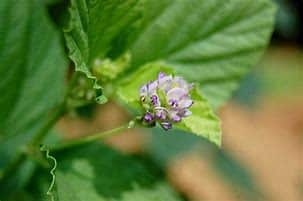
Molecular shock: Bakuchiol is not NOT a retinoid.
- It doesn't look like vitamin A.
- It does not convert to retinoic acid.
So why does everyone compare them?
The study that started it all (The «Drama»)
It all started with a 2019 study published in the British Journal of Dermatology (Dhaliwal et al.).
The pitch: 44 people, 12 weeks. Bakuchiol vs. Retinol. The published result: Both groups saw a similar reduction in wrinkles, but the Bakuchiol group did not have no irritation.
The media ran headlines such as: «The end of retinol».
But here's what they forgot to tell you (the fine print):
- Conflict of interest: The lead author is a consultant for a company that sells bakuchiol. (This does not invalidate the study, but it does call for caution).
- The sample: 44 people is microscopic in science. Studies on retinol involve thousands of cases.
- Duration: 12 weeks is enough to see the effect on skin texture, but too short to judge the deep anti-aging effect (on established wrinkles), which takes 6 to 12 months.
3. The Car Analogy (To understand everything)
If bakuchiol is not vitamin A, how can it produce similar results?
Imagine two cars: one Ferrari gasoline (Retinol) and a Electric Tesla (Bakuchiol).
- Retinol (Ferrari): It's powerful, brutal, noisy (irritating), and requires an experienced driver, but it goes very fast on the track. The engine runs on combustion.
- Bakuchiol (Tesla): It's quiet, smooth, and easy to drive. The engine is electric.
Both take you from point A to point B (improved skin). But the engine (the biological mechanism) is completely different.
- Retinol forces cell renewal by binding directly to nuclear receptors.
- Bakuchiol stimulates collagen and calms inflammation through indirect pathways (MMP inhibition, antioxidant).
Key conclusion: Have effects similar to the naked eye does not mean that it is the same biologically.
4. What science validates (and what it does not validate)
Let's be clear: bakuchiol is not a scam. It's an excellent ingredient, but we need to stop attributing powers to it that it hasn't yet proven.
✅ What has been PROVEN:
- Excellent tolerance: No tingling, no redness.
- Action on brightness: The complexion is brighter after 12 weeks.
- Antioxidant : It provides good protection against environmental aging.
- Photostable: Unlike retinol, it does not degrade in light (you can apply it in the morning).
❌ What is NOT proven:
- Perfectly equal to retinol: No long-term studies (> 1 year) prove that it smooths deep wrinkles as well as retinol.
- Action on severe acne: Retinol remains the best ingredient for unclogging pores (keratolytic). Bakuchiol helps, but is less powerful.
5. The verdict: Bakuchiol or Retinol? (My guide)
Marketing wants you to choose a side. In reality, it all depends on your profile.
Choose BAKUCHIOL if:
- ✅ Your skin is ultra-sensitive or rosacea (retinol is not suitable for you).
- ✅ You are pregnant or breastfeeding* (*always consult your doctor, but this is the safest option).
- ✅ You want a simple routine without an adjustment period («retinization»).
- ✅ Are you mainly looking for prevention (20-30 years old) and radiance.
Choose RETINOL (or Retinal) if:
- ✅ You want maximum efficiency scientifically proven.
- ✅ Do you have any deep wrinkles or visible sun damage.
- ✅ You deal with’acne or scars.
- ✅ You are prepared to endure a few weeks of adjustment.
The last word
Bakuchiol is not the «new retinol.» It is the Bakuchiol. It's a fantastic ingredient in its own right, especially for sensitive skin. But don't throw away your tube of retinol if your skin can tolerate it: in terms of pure power, the «Ferrari» remains a step ahead.
What about you? Team Retinol (hardcore) or Team Bakuchiol (gentle)? Let me know in the comments!
Sources:
- Dhaliwal S, et al. (2019). British Journal of Dermatology.
- Chaudhuri RK, Bojanowski K. (2014). International Journal of Cosmetic Science.


