
Fair Skin or Dark Skin: The Secrets to Effective Sun Protection

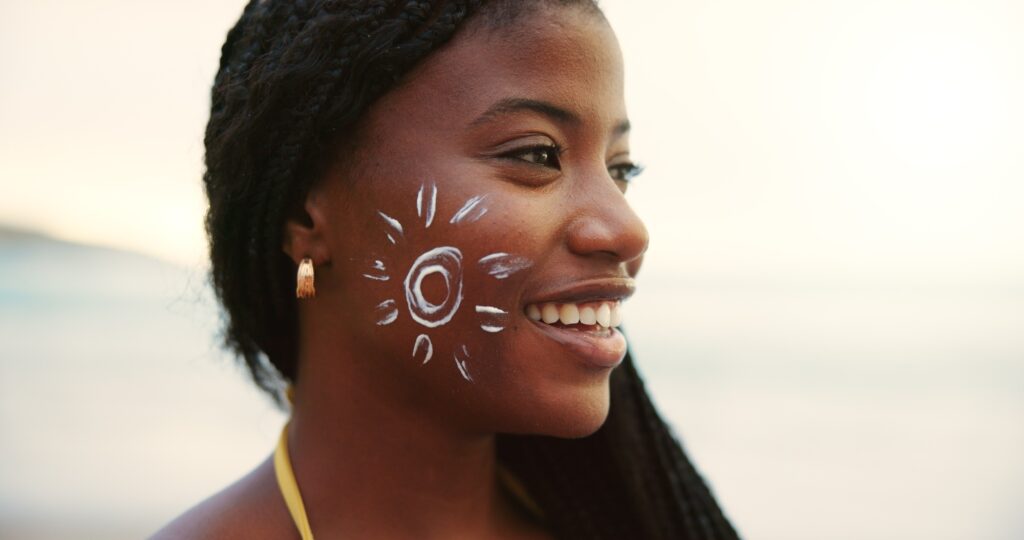
In summer, myths and misconceptions resurface: very fair skin is doomed to redden, while black skin is «immune» to sunburn. However, the science of melanin, phototype classification, and epidemiological data paint a much more nuanced picture. Understanding these mechanisms is essential for enjoying the sun without compromising your skin health.
Phototype: your skin's sun signature
Skin color depends mainly on the type and amount of melanin produced: eumelanin (brown to black pigment) effectively filters UV rays, while the pheomelanin (yellow to red pigment) absorbs much less. Each individual therefore has a solar «signature»—their phototype (I to VI) combines skin tone, hair color, and eye color—which determines how quickly they tan and how sensitive they are to sunburn.
How skin actually tans
Under the effect of UVB rays, melanocytes intensify melanin synthesis; under the effect of UVA rays, this melanin oxidizes and darkens. The number of melanocytes does not vary from one individual to another; only the dynamics of production vary, explaining why fair skin tans slowly while dark skin darkens quickly.
Sunbathing without getting burned: what every skin type needs to know
- Skin type I : milky skin, freckles, systematic sunburn; tan remains virtually invisible.
- Skin type II : very fair skin, frequent redness, light tanning possible with caution.
- Skin type III : fair to medium skin, moderate sunburn, gradual tanning.
- Skin type IV : dark skin, rarely gets sunburned, tans quickly and deeply.
- Phototype V : dark skin, exceptional superficial burns, very tanned complexion.
- Skin type VI : dark skin, superficial burns are rare but not impossible; the complexion may darken further.
People with albinism (phototype 0) produce virtually no melanin; they do not tan and must protect themselves at all times.
The illusion of dark skin's invincibility
Natural pigmentation provides a “biological SPF” of around 13 in very dark skin, compared with 3 in very fair skin, which offers only partial protection. The incidence and mortality rates of skin cancer remain lower for dark skin types, but late diagnosis worsens the prognosis.
What sun protection should you use?
- Skin types I to III : Always choose SPF 50+ and reapply every two hours or after swimming/sweating.
- Skin types IV to VI : SPF 30 is the minimum, to be applied with the same rigor; beyond the risk of sunburn, the goal is to prevent hyperpigmentation and photoaging.
Sunscreen is only one line of defense; shade, protective clothing, and regular dermatological checkups complete the strategy.
Chronic effects: why vigilance remains essential
Free radicals, collagen fiber damage, pigment spots: UV rays accelerate skin aging regardless of skin type. In the long term, cumulative exposure increases the risk of actinic keratoses and skin cancer. Only constant sun protection, combined with early screening, can reduce these risks in the long term.


