
Acne and the Sun: Why Your Flawless Skin in August Will Let You Down in September

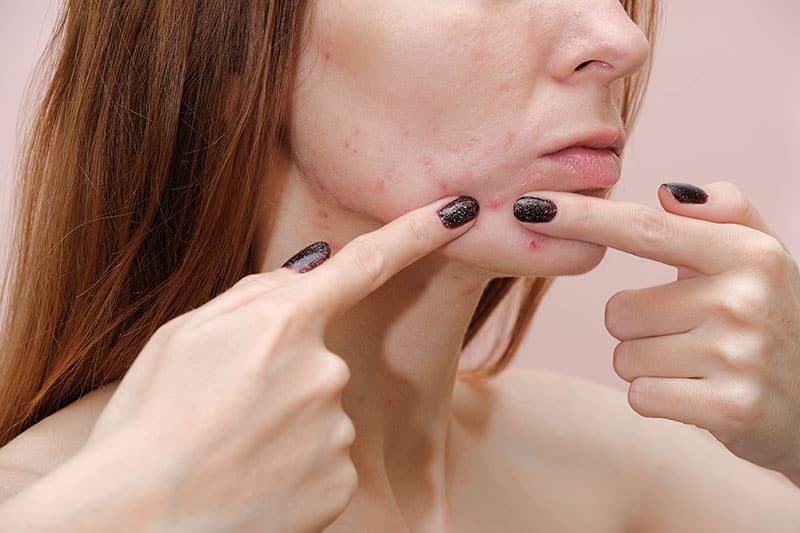
July. The breakouts are fading, your complexion is evening out, and your skin finally seems calm. You tell yourself that the sun is good for you.
It's a mirage. And he'll pay for it in full when school starts again.
📌 See also: No, your mineral sunscreen isn't any healthier
What the Sun Really Does to Acne-Prone Skin
It doesn't cure anything. It just masks the problem.
Tanning thickens the stratum corneum and visually evens out redness. Inflammatory lesions blend into the tan. At the same time, UV rays have a mild local immunosuppressive effect that temporarily calms inflammation.
You see fewer pimples. You don't have any fewer.
The Mechanism Behind the Rebound Effect
That’s when the trap snaps shut. Sun exposure triggers hyperkeratinization: the skin thickens as a defense mechanism. The openings of the pilosebaceous follicles narrow.
Meanwhile, the heat stimulates sebum production. So you end up with more sebum and less of it coming out.
The result is inevitable. Blackheads form silently, beneath the surface, throughout the summer. Two to six weeks after sun exposure ends, the stratum corneum thins out again. Everything that has built up comes to the surface all at once.
It's the September meltdown. It's not caused by the start of the school year, stress, or getting back into the swing of things. It was set in motion back in July.
The Three Mistakes That Make Everything Worse
Stopping treatment while on vacation. It’s an understandable reaction: once your skin starts looking better, you ease up on the treatment. But the acne hasn’t gone away—it’s just hidden. Stopping treatment right when blackheads are forming leaves the field open.
Choosing a sunscreen that's too occlusive. Many conventional sunscreens are designed to be water-resistant, not for skin that already produces sebum. Thick texture, oily filters, occlusive film: you’re adding another layer on top of pores that are already constricted.
Over-strip as a reaction. The skin becomes shiny, so we cleanse more vigorously and exfoliate more often. The skin barrier breaks down, inflammation increases, and sebum production ramps up. It’s a vicious cycle.
What to Do, in Practical Terms
Don't stop anything. Unless there is an explicit medical contraindication. Some treatments are photosensitizing (topical retinoids, cyclines, benzoyl peroxide) and require an adjustment, not discontinuation. This decision should be made in consultation with a doctor, not on your own.
Changing your sunscreen makes no sense. An SPF 50 fluid that is non-comedogenic, with a gel-like or watery texture. Ideally enriched with niacinamide, which regulates sebum rather than ignoring it.
Include a keratolytic agent. Salicylic acid is lipophilic: it penetrates the sebum and works inside the pore. That’s exactly what you need when the pore narrows. Use it in moderation—don’t overdo it.
Get a head start on September in August. Start gradually two weeks before the end of the blooming period. Don't wait until the buds appear.
Beauty Decoded's Review
Every year, in mid-September, I see the same type of patient. Their skin was doing great in August, they had a sudden inflammatory flare-up three weeks later, and they’re completely baffled.
The explanation is simple to state but difficult to accept: the improvement seen in the summer is cosmetic, not therapeutic. The sun has never cured acne. It merely shifts when the symptoms appear.
And here’s a reminder that’s non-negotiable: on acne-prone skin, sun exposure also worsens pigmented scars. Post-inflammatory hyperpigmentation (PIH) left unprotected in the sun becomes darker and takes much longer to fade. SPF isn’t just a cosmetic choice here—it’s part of the treatment.
Dr Sylvain David, plastic surgeon
What the Beauty Decoded community has to say
Data from the app reveals an interesting point: users with blemish-prone skin are no longer looking for a sunscreen that protects, but one that doesn't clog pores.
In the lead is the Relief Sun Aqua-fresh Rice + B5 SPF 50+ by Beauty of Joseon scores a 5/5 based on 14 reviews, with a watery texture designed for combination to oily skin. The CAPITAL SOLEIL UV-age Daily by Vichy has a rating of 4.92/5 based on 12 reviews, and the Madagascar Centella Hyalu-Cica Water-Fit Sun Serum by Skin1004 Rated 4.91/5 based on 22 reviews. What these three have in common is that they contain niacinamide or centella, two active ingredients that address sebum and inflammation rather than simply filtering out UV rays.
In the anti-shine category specifically, the’Eucerin Oil Control Gel-Cream with a Matte Finish SPF 50+ has a rating of 4.42/5 based on 31 reviews, and the Sun Secure Blur SPF 50+ by SVR 4.11/5 based on 70 reviews, one of the highest review counts in the category.
When it comes to anti-blemish ingredients, the line Sebiaclear by SVR dominates: the Foaming Gel and the Micro Peel each have a rating of 5/5, and the’Flash bulb 4.38/5 based on 16 reviews, with the highest blemish score in the database (95/100). At CeraVe, the’Acne Control Cleanser is rated 5 out of 5 based on 5 reviews, and the Anti-Imperfection Foaming Gel 4.5/5 based on 33 reviews.
For gentle exfoliation, the 2% BHA Liquid Exfoliant by Paula’s Choice remains the top choice with a rating of 4.74/5 based on 31 reviews, while the Calm Down 4% PHA + BHA by Geek & Gorgeous Rated 4.77 out of 5 based on 13 reviews, a gentler alternative for skin that’s already been weakened by the summer.
And azelaic acid is gaining popularity: the’AZID Azelaic Acid 15% by Theramid Rated 5 out of 5 based on 5 reviews, this active ingredient has the advantage of targeting both inflammation and post-acne hyperpigmentation.
Don't let September catch you off guard
Is your sunscreen really non-comedogenic? Is your summer skincare routine causing a rebound effect without you even realizing it? The answer is in the INCI list.
Download the app Beauty Decoded (free, iOS and Android), scan your summer products, and find out what they’re really doing to your skin. Over 20,000 products analyzed, objective skin concern scores, and thousands of verified reviews.
Make the right choices for your skin
Say goodbye to unnecessary get visible results!
Our artificial intelligence recommends personalized cosmetics.




One Comment
Comments are closed.