Brand reviews - BeautyDecoded analysis
Bi-Oil.
Opinions Bi-Oil - Doctor's analysis and BeautyDecoders' opinion.
Bi-Oil (French spelling) - internationally known as Bio-Oil® - is a cosmetics brand South African specialist for scars, stretch marks and dark spots. Parent brand Union Swiss (Pty) Ltd founded in 1954 in Cape Town, signature formulation developed by Dieter Beier (German chemist) and launched commercially in 1987. Turning point: 2000 buyout by the Letschert brothers with a radical strategy of abandoning the 120 Union Swiss products and focusing on a single Bio-Oil product. Distribution 50+ countries, growth from 5 M ZAR to billions worldwide. Catalog analyzed 5 references. Sensitive median -15.25 very unfavorable (retinyl palmitate + aromatic essential oils). Pépite relative: Moisturizing Milk for Very Dry Skin 175 ml -0.25 + anti-aging 68 + redness +34. Average anti-ageing 70.2 paradoxically high. Central pedagogical point: eviction consistent pregnancy despite worldwide cultural use to prevent stretch marks (retinyl palmitate + EO not recommended as a precaution).
5 ref
Catalog analyzed - 3 creams/milks + 2 signature care oils
1987
Launch of Bio-Oil by Dieter Beier - German chemist
2000
Single-product focus Letschert brothers - case study
50+ countries
Worldwide distribution - Union Swiss Cape Town + Durban + Johannesburg
Further information
Browse the 5 Bi-Oil references on your skin profile.
The BeautyDecoded app lets you scan any cosmetic product to visualize its suitability for your skin type and needs, based on INCI analysis - particularly useful for identifying the relative nugget in the catalog (Lait Hydratant Peaux Très Sèches -0.25), understanding the science of cosmetic retinoids (retinyl palmitate vs. retinaldehyde), and confirming consistent pregnancy precautions (recommended avoidance despite worldwide cultural usage).
Formulation positioning
Iconic South African brand for scars and stretch marks - Dieter Beier inheritance 1987, Letschert single-product focus 2000 and worldwide distribution 50+ countries.
Bi-Oil is the French spelling distributed by the French laboratories of the brand known internationally as Bio-Oil® - cosmetic brand South African specialist for scars, stretch marks and dark spots with a particularly striking founding story. Union Swiss (Pty) Ltd, parent brand, has been founded in 1954 in Cape Town, South Africa initially as an importer of Swiss skincare products to the Union of South Africa (hence the name «Union Swiss»). The Bio-Oil signature product was developed by Dieter Beier - a German chemist based in South Africa - who spent several years of personal research to develop an oil-based formula capable of treating his skin condition of persistent dryness. The signature formulation was launched commercially in 1987.. The turning point: acquisition of Union Swiss in 2000 by brothers David and Justin Letschert - former M&A advisors specializing in the pharmaceutical and cosmetics industries. Their strategic decision was radical and consistent: abandon the 120 products in the Union Swiss portfolio to focus exclusively on Bio-Oil, the only reference with international potential. This single-product focus with global ambitions has become a textbook case of cosmetics strategy.. Result: growth from R5 million (South Africa 2000 sales) to R1 billion (worldwide sales), distribution in over 50 countries, A worldwide cosmetic recommendation for the prevention of stretch marks during pregnancy. Union Swiss retains its headquarters in Cape Town + laboratory in Durban + factory in Johannesburg. Four distinctive pillars of identity : (1) specializing in problems related to scars + stretch marks + pigmentation spots + signs of aging + dry skin - distinctive «specialist skincare» positioning; (2) patented PurCellin Oil™ signature ingredient (Cetearyl Ethylhexanoate - a synthetic ester that facilitates skin absorption of active ingredients and gives a characteristic fluid, non-greasy texture); (3) vitamin cocktail + vegetable oils - vitamin A (retinyl palmitate), vitamin E (tocopherol), calendula, lavender, rosemary, chamomile; (4) multi-target oil format single-product history. The catalog analyzed includes 5 references. Average score for sensitive skin -11.65 (median -15.25) unfavorable consistent with retinyl palmitate + aromatic essential oils. Paradoxically high average anti-aging score 70.2 consistent retinyl palmitate + vitamin E + antioxidant plant oils. Average redness score -219.3 very unfavorable.
01
PurCellin Oil™ oil-based architecture - documented signature formulative innovation
The brand's signature first pillar: a patented active ingredient PurCellin Oil™ - it is chemically a synthetic ester (Cetearyl Ethylhexanoate - cetyl-cetearyl stearate), a lipid molecule with a particularly rapid skin absorption profile and a non-greasy feel. Bio-Oil/Bi-Oil's distinctive formulative concept is based on an oil-based architecture rather than an aqueous cream-lotion. - Dieter Beier justifies his choice on a scientific basis: «oil creates a quasi-anoxic environment for the active ingredients vitamins + plant extracts, enabling them to retain their potential without resorting to the preservatives typical of aqueous formulations». This is consistent with the principles of stability for fat-soluble active ingredients in cosmetics (vitamin A, vitamin E, carotenoids - particularly sensitive to oxidation in aqueous environments). Distinctive advantages of oil-based architecture : (1) high stability of fat-soluble active ingredients free of conventional aqueous preservatives (parabens, phenoxyethanol); (2) rapid skin absorption thanks to PurCellin Oil™ which lightens the texture (vs. massive pure oil which would remain greasy); (3) claimed to be non-comedogenic - the synthetic ester being non-occlusive. Objective algorithmic limitations observed in the catalog analyzed The combination of oil-based + cocktail of aromatic essential oils (lavender, rosemary) + retinyl palmitate produces an unfavorable dermatological tolerance profile (median -15.25), consistent with a significant concentration of natural fragrance allergens (linalool present in lavender, eucalyptol/cineole in rosemary, camphor in certain essential oils). PurCellin Oil™ itself is not the cause of the unfavorable profile - it's the overall formulative combination that produces this algorithmic profile.
02
Retinyl palmitate (vitamin A) - central cosmetological anti-aging active ingredient with pregnancy precautions
The second formulative pillar is important to understand objectively: Bi-Oil formulation contains retinyl palmitate - synthetic ester of retinol (vitamin A), a cosmetically stable form used in many affordable anti-ageing cosmetics. It is probably the main explanatory factor for the paradoxically high average anti-ageing score of 70.2 in the Bi-Oil catalog analysed despite its unfavorable safety profile. Scientifically documented potency hierarchy of cosmetic retinoids (Sorg O, Dermatology, 2006): (1) Retinyl palmitate / retinol esters - require two skin enzyme conversions (Pro-retinol → Retinol → Retinaldehyde → Retinoic acid active on RAR/RXR receptors); (2) Retinol - one enzymatic conversion to become retinaldehyde then retinoic acid; (3) Retinaldehyde (preferred modern dermo-cosmetic form) - a single conversion; (4) Retinoic acid / Tretinoin - direct active, prescription-only medicine. Bi-Oil retinyl palmitate is therefore the least potent cosmetic retinoid in the cascade. - its anti-aging power is significantly lower than that of pure retinol, and far lower than that of encapsulated retinaldehyde in pharmaceutical dermo-cosmetics benchmarks (Avène RetrinAL 0.1 %, Allies of Skin Retinal 0.1 % & Peptides - anti-aging 93.5 RECORD ABSOLU PANEL BD). The algorithmic efficacy observed (anti-ageing 70.2 average) is due more to the combination of retinyl palmitate + lactic acid + vitamin cocktail + antioxidant vegetable oils than retinyl palmitate alone. Central teaching point pregnancy precautions All cosmetic retinoids (including retinyl palmitate, as a precautionary measure) are not recommended during pregnancy and breastfeeding, according to contemporary dermatological recommendations (EADV, AAD) - despite the traditional cultural use of Bi-Oil for stretch mark prevention, favored dermo-cosmetic alternatives (Mustela, Lierac Phytolastil).
The Bi-Oil range
Three categories to cover the range for scars + stretch marks + dry skin.
The Bi-Oil catalog analyzed is structured around three complementary categories around the brand's historic «specialist skincare» positioning. Mapping of categories with their target and analyzed references.
| Category / focus | Target/issues | References analyzed BD |
|---|---|---|
| Historic signature treatment oil | Scars + stretch marks + age spots + signs of aging | Scar and Stretch Mark Oil 200 ml, Natural Stretch Mark Oil 200 ml |
| Dry & very dry skin care | Cocooning daily body moisturizer | Dry Skin Gel 100 ml, Very Dry Skin Moisturizing Milk 175 ml ⭐ |
| Multi-target general care | Versatile daily care | Skin Care |
PurCellin Oil™ and oil-based architecture - documented signature innovation. PurCellin Oil™ is the’patented active distinctive signature of Bi-Oil/Bio-Oil - chemically the Cetearyl Ethylhexanoate (synthetic ester of cetyl-cetearyl stearate). Formulative concept scientifically justified by Dieter Beier: «the oil creates a quasi-anoxic environment for the active ingredients, vitamins + plant extracts, enabling them to retain their potential without resorting to the preservatives typical of aqueous formulations».». This is consistent with the principles of stability of liposoluble active ingredients. Source for cosmetic retinoids : Sorg O et al. Retinoids in cosmeceuticals. Dermatology. 2006.
Consistent pregnancy precautions - Central teaching point
Bi-Oil and pregnancy - eviction recommended despite worldwide cultural use to prevent stretch marks.
A central pedagogical point for Bi-Oil: the brand has been culturally associated with the prevention of pregnancy stretch marks for decades - particularly widespread traditional use. However, the, contemporary dermatological literature calls for consistent precautions.
| Dermatological appearance | Bi-Oil (Signature oil) | Pregnancy recommendation |
|---|---|---|
| Retinyl palmitate (vitamin A) | Present in signature formulation | Not recommended as a dermatological precaution (EADV/AAD) |
| Aromatic essential oils | Lavender, rosemary, chamomile | Some not recommended pregnancy - precaution |
| Traditional cultural use | Stretch mark prevention (worldwide popularity) | Coherence vs. modern contemporary precaution |
| Documented effectiveness | Hydration + skin suppleness | Absolute prevention impossible (dominant genetics) |
| Dermo-cosmetic alternatives | - | Mustela, Lierac Phytolastil, Bepanthen Karité |
| Sensitive score Bi-Oil signature | -18,75 to -15.25 unfavorable | Unfavorable pregnancy tolerance profile |
Important coherent pregnancy recommendation. Despite the worldwide cultural use of Bi-Oil for the prevention of pregnancy stretch marks, contemporary dermatological literature recommends precautionary avoidance during pregnancy and breastfeeding. All cosmetic retinoids (including retinyl palmitate) are not recommended for pregnancy as a standard dermatological precaution (EADV, American Academy of Dermatology). Preferred dermo-cosmetic alternatives for pregnancy Mustela Crème Prévention Vergetures (specifically formulated French dermo-cosmetic pregnancy reference ~€17-25), Lierac Phytolastil Sérum Vergetures Grossesse (~€20), Bepanthen Beurre de Karité (maternity-compatible), Weleda Huile de Massage Vergetures (pure plant oils without risky EOs). Objectively important Despite all topical treatments, stretch marks cannot be totally prevented - they depend largely on individual genetic factors and weight gain.
Position in the contemporary scars + stretch marks panel
Bi-Oil for scar and stretch mark referrals - global icon vs. modern dermo-cosmetics.
Comparison with other contemporary scar + stretch mark references Cicaplast Baume B5 La Roche-Posay (French dermo-cosmetic reference), Cicabio Crème Bioderma (French cosmetic healing), Mustela Crème Prévention Vergetures (specialized French pregnancy reference).
| Criteria | Bi-Oil | Cicaplast B5 LRP | Cicabio Bioderma | Mustela Stretch Marks |
|---|---|---|---|---|
| Origin | South Africa 1987 (Union Swiss 1954) | France L'Oréal Active Cosmetics | France NAOS | France Mustela Expanscience 1950 |
| Founder / History | Dieter Beier German chemist | Dermo-cosmetics pharmaceuticals | Dermo-cosmetic research | Dedicated maternity specialist |
| Main target | Scars + stretch marks + spots + dryness | Post-procedure healing / irritation | Post-procedure cosmetic healing | Stretch mark prevention for pregnant women |
| Signature active | PurCellin Oil + retinyl palmitate + HE | Panthenol 5 % + madecassoside | Antalgicine + niacinamide + copper + zinc | Avocado peptides Mustela patent |
| Format | Oil + Milk + Gel | Baume cica | Healing cream | Pregnancy cream + oil + serum |
| Pregnancy compatibility | NOT recommended ⚠ | Compatible | Compatible | specific pregnancy target |
| Catalog analyzed BD | 5 references | Not detailed BD | Not analyzed BD | Not analyzed BD |
| Average price | ~12-25 € (depending on format) | ~13 € (40 ml) | ~14 € (40 ml) | ~17-25 € (pregnancy range) |
| Distribution | 50+ countries worldwide | Pharmacy + drugstore | Pharmacy + drugstore | Pharmacy + maternity units |
Bi-Oil occupies a unique position in the contemporary scars + stretch marks segment. (1) South African-born founder Dieter Beier 1987 with a remarkable entrepreneurial history (single-product focus Letschert 2000, spectacular international growth, 50+ countries of distribution); (2) distinctive multi-target oil format with patented PurCellin Oil™ (synthetic ester facilitating skin absorption); (3) cosmetically consistent retinyl palmitate + vitamin E + vegetable oils cocktail (average anti-aging 70.2 paradoxically high); (4) widespread cosmetic use worldwide especially to prevent stretch marks during pregnancy. Honest algorithmic limits median sensitive -15.25 very unfavorable + redness -219.3 consistent with retinyl palmitate + aromatic EOs; limited relative nugget (Very Dry Skin Moisturizing Milk -0.25 only acceptable reference); ; NO suitable for pregnancy despite historical cultural use. For superficial scars + resistant skin + outside pregnancy, Bi-Oil is consistent with its historical cosmetic use.. For scars requiring optimized dermatological performance or pregnancy: Cicaplast B5 LRP, Cicabio Bioderma, Cicalfate+ Avène, Mustela Crème Prévention Vergetures remain the preferred choice.
Overview
The five references analyzed, at a glance.
Sorted by decreasingly sensitive skin score. Pépite relative Moisturizing Milk Very Dry Skin -0.25. Signature care oils -15.25 to -18.75 unfavorable (retinyl palmitate + aromatic EOs). Average anti-ageing 70.2 paradoxically high.
| Product | Category | Sensitive score | Key score |
|---|---|---|---|
| Moisturizing Milk Very Dry Skin 175 ml | Moisturizing body milk | -0,25 | ⭐ Pépite relative - Anti-âge 68 + Taches 52.7 + Rougeurs +34 |
| Dry Skin Gel 100 ml | Moisturizing body gel | -8,75 | Anti-ageing 68 + Blemishes 52.7 - Shea + lactic + niacinamide cocktail |
| Skin Care | Multi-purpose care cream | -15,25 | Anti-ageing 68 + Spots 24.6 - Unfavourable profile |
| Natural Oil for Stretch Marks and Scars 200 ml | Skin care oil (natural) | -15,25 | Anti-ageing 72.2 + Blemishes 31.5 - Natural version |
| Scar and Stretch Mark Oil 200 ml (classic) | Signature treatment oil | -18,75 | Anti-ageing 74.8 RECORD + Blemishes 42.5 - Historical reference |
Family 01
Relative nugget and dry skin care - Lait Hydratant Peaux Très Sèches 175 ml and Gel Peaux Sèches
The two products in the Bi-Oil body care range. Moisturizing Milk Very Dry Skin 175 ml catalog relative nugget (-0.25 + anti-ageing 68 + redness +34 - jojoba cocktail + lactic acid + PurCellin Oil™). Dry Skin Gel 100 ml Coherent cosmetological cocktail (-8.75 + shea + lactic + niacinamide) but unfavorable tolerance profile.
Moisturizing body lotion for very dry skin - relative nugget catalog
PÉPITE relative catalog Bi-Oil - cocooning moisturizing body reference for very dry skin
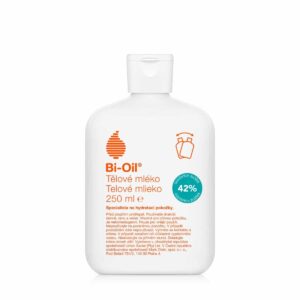
Moisturizing Milk Very Dry Skin 175 ml
Bi-Oil moisturizing body lotion for very dry skin with distinctive cocktail formula : jojoba oil (Simmondsia chinensis) - documented plant emollient mimicking natural skin sebum (liquid wax composition close to human sebum, particularly suitable for skin hydration - Lin TK, Int J Mol Sci, 2018); ; lactic acid (hygroscopic AHA) - AHA better tolerated than glycolic, particularly suitable for dry skin thanks to its additional hygroscopic properties; ; PurCellin Oil™ signature - characteristic non-greasy fluid texture. Sensitive skin score -0.25 - the least unfavorable score in the Bi-Oil catalog analyzed (other references range from -8.75 to -18.75). Favorable redness score +34 - consistent with soothing jojoba cocktail + absence of aromatic essential oils in this specific formulation.
Scores BeautyDecoded
Dry skin
91
Oily skin
70
Normal to dry skin
91
Normal to oily skin
70
Sensitive skin
-0,25
Anti-aging / Redness
68 / +34
⚠ Sensitivity verdict
Slightly cautious (score: -0.25 - least unfavourable catalog). Redness score +34 favorable + anti-aging 68 + spots 52.7. Relative catalog nugget - cocooning moisturizing body reference diversifying Bi-Oil's offer beyond the signature care oil.
Clinical source : Lin TK et al. Anti-Inflammatory and Skin Barrier Repair Effects of Topical Application of Some Plant Oils. Int J Mol Sci. 2018.
" Lait Hydratant Peaux Très Sèches 175 ml is the relative nugget of the Bi-Oil catalog analysed. For a loyal Bi-Oil user looking for a cocooning moisturizing body lotion for very dry skin with a light anti-aging dimension + favorable performance/tolerance ratio, this is a benchmark option in the brand's catalog. Sensitive score -0.25 acceptable + redness +34 favorable + anti-aging 68 + blemishes 52.7. Daily application to body after shower on slightly damp skin (optimizes penetration). Compare with contemporary moisturizing body lotions for very dry skin: Lipikar Baume AP+ LRP (atopy reference ~€15), Atoderm Crème Bioderma (French dry skin reference ~€17), Aveeno Daily Moisturizing Lotion (~€12). Lait Hydratant Bi-Oil is positioned with an additional light anti-aging dimension thanks to lactic acid. Pregnancy precautions: to be validated individually with your doctor according to complete INCI reading.»
Verdict - PÉPITE relative Bi-Oil catalog - Sensitive score -0.25 + anti-aging 68 + redness +34. Cocooning moisturizing body reference for very dry skin with a light, consistent anti-aging dimension.
Moisturizing body gel for dry skin - shea + lactic + niacinamide cocktail
Interesting cosmetology cocktail but unfavorable tolerance profile - reserved for resistant skin
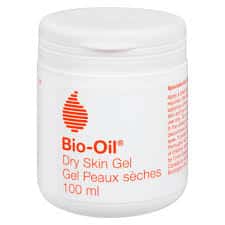
Dry Skin Gel 100 ml
Bi-Oil moisturizing body gel for dry skin with cosmetically consistent multi-active cocktail : (1) Shea butter (Butyrospermum parkii butter) - nourishing plant emollient rich in essential fatty acids + tocopherols (vitamin E); (2) Lactic acid (hygroscopic AHA) - Gentle moisturizing AHA + cell renewal dimension; (3) Niacinamide (vitamin B3) - documented multitasking active ingredient (Bissett DL, Dermatol Surg, 2005): barrier regulation + anti-pigmentation + anti-inflammatory action. Consistent combination for intensive moisturizing of dry skin body with light anti-aging dimension + radiance-uniformity. Noteworthy training case Despite a cosmetically interesting cocktail of formulants (shea + lactic + niacinamide - a rare and precious combination), the tolerance profile remains unfavorable (-8.75 sensitivity + -144.5 redness).
Scores BeautyDecoded
Dry skin
84
Oily skin
77
Normal to dry skin
84
Normal to oily skin
77
Sensitive skin
-8,75
Anti-aging / Redness
68 / -144,5
❌ Sensitivity verdict
Not suitable for sensitive skin (score: -8.75 unfavorable). Anti-ageing score 68 + spots 52.7 consistent with lactic acid + niacinamide + shea butter cocktail. For resistant skin only.
" Bi-Oil Dry Skin Gel has a coherent cosmetological cocktail (shea + lactic acid + niacinamide) but an unfavorable tolerance profile.. For a Bi-Oil user with resistant dry skin looking for an affordable moisturizing gel with an anti-aging + radiance-uniformity dimension, this is a relevant option in the Bi-Oil catalog. For sensitive skin looking for a well-tolerated shea-niacinamide cocktail, our preferred alternatives are Aveeno Calm + Restore Skin Therapy Balm (+2.30 RECORD Aveeno + 1 % oats + ceramide + niacinamide ~15 €), CeraVe Crème Hydratante (with ceramides + niacinamide ~10 €), Lipikar Baume AP+ LRP (atopy reference ~15 €). »
Verdict - Consistent cosmetology cocktail - Sensitive score -8.75 unfavorable + anti-aging 68 + blemishes 52.7. Reserved for resistant skin - for sensitive skin, dermo-cosmetic alternatives preferred (Aveeno Calm + Restore +2.30, Lipikar AP+ LRP)..
Family 02
Historic signature care oils - Cicatrice et Vergeture 200 ml and Huile Naturelle Vergetures 200 ml
The two iconic references in the Bi-Oil catalog. Scar and Stretch Mark Treatment Oil 200 ml historic reference signature 1987 (-18.75 + anti-aging 74.8 RECORD - retinyl palmitate + vit E + aromatic EO cocktail). Natural Oil for Stretch Marks and Scars 200 ml natural version (-15.25 + anti-aging 72.2). Accepted unfavorable tolerance profile + coherent pregnancy precautions.
Multi-target skincare oil historic signature - iconic reference 1987
Historical reference signature - strictly skin resistant + STRICTLY AVOID pregnancy
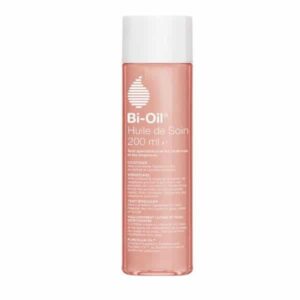
Bi-Oil Scar and Stretch Mark Treatment Oil 200 ml
The brand's signature historical reference since 1987, founding product Bi-Oil/Bio-Oil. Distinctive, multi-targeted cocktail formulas (scars + stretch marks + pigment spots + signs of ageing + moisturizing dry skin): (1) PurCellin Oil™ (Cetearyl Ethylhexanoate) - synthetic ester signature fluid texture; (2) Retinyl palmitate (vitamin A) - cosmetic retinoid ester (least potent form of the retinoid cascade); (3) Tocopherol (vitamin E) - documented lipophilic antioxidant; (4) Aromatic essential oils cocktail - calendula, lavender, rosemary, chamomile. Anti-ageing score 74.8 - the highest anti-ageing score in the Bi-Oil catalog analysed, consistent with the presence of retinyl palmitate + vitamin E + antioxidant plant oils. Sensitivity score -18.75 and redness -386.8 - unfavorable dermatological tolerance profile consistent with retinyl palmitate + aromatic EOs (linalool, eucalyptol, camphor).
Scores BeautyDecoded
Dry skin
77
Oily skin
77
Normal to dry skin
77
Normal to oily skin
77
Sensitive skin
-18,75
Anti-aging / Redness
74,8 / -386,8
❌ Sensitivity verdict
Not suitable for sensitive skin (score: -18.75 unfavorable - the most unfavorable score in the catalog). Redness score -386.8 unfavorable. Anti-aging score 74.8 RECORD catalog consistent retinyl palmitate. Strictly for resistant skin with no known reactivity.
STRICTLY AVOID during pregnancy and breast-feeding despite traditional cultural use to prevent stretch marks - presence of retinyl palmitate + aromatic essential oils (lavender, rosemary) not recommended for pregnancy due to contemporary dermatological precautions (EADV, AAD). Preferred pregnancy alternatives Mustela Crème Prévention Vergetures (dermo-cosmétique grossesse française ~17-25 €), Lierac Phytolastil Sérum Vergetures Grossesse (~20 €), Bepanthen Beurre de Karité, Weleda Huile de Massage Vergetures (without risky HE). For scars on sensitive skin Cicaplast B5 LRP, Cicabio Bioderma, Cicalfate+ Avène. For hypertrophic scars Topical silicone gel/patch remains the documented dermatological reference.
" Scar and Stretch Mark Treatment Oil is the iconic historical reference in the Bi-Oil catalog - the brand's signature product since 1987 with worldwide cosmetic use.. For users with resistant skin, old or recent superficial scars (after complete healing) + stabilized stretch marks (excluding pregnancy) + moderate pigmentation spots looking for an affordable cosmetic treatment with a light cosmetological anti-aging dimension, this is a relevant option. Apply with a circular massage 2 times a day for a minimum of 3 months. IMPORTANT Sensitive score -18.75 unfavorable - strictly reserved for resistant skin with no known reactivity. Avoid use on sensitive skin, active atopy, rosacea. STRICTLY AVOID during pregnancy and breast-feeding. For maximum corrective anti-aging: accessible alternatives with superior algorithmic performance (Liposome Retinol LX APLB anti-aging 88.4 + sensitive +1.05 RECORD tolerance retinol tolerated ~€15, Avène RetrinAL 0.1 % retinaldehyde ~€30, Retinal 0.1 % & Peptides Allies of Skin anti-aging 93.5 RECORD ABSOLU PANEL BD ~€125).»
Verdict - Historical reference catalog signature - Sensitive score -18.75 + anti-aging 74.8 RECORD catalog + redness -386.8. Worldwide cosmetic use - strictly resistant skin + STRICTLY AVOID pregnancy/breastfeeding (retinyl palmitate + EO not recommended)..
Care oil natural version - recent catalog variation
Natural version signature oil - unfavorable tolerance profile + pregnancy precautions
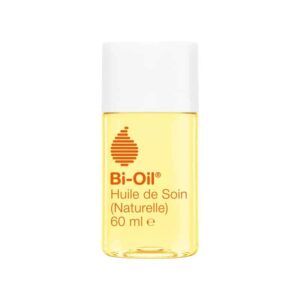
Natural Oil for Stretch Marks and Scars 200 ml
Natural« version of Bi-Oil signature skin care oil - A formulative positioning claiming a natural approach that complements the classic version. Formulative cocktail consistent with the brand's multi-target positioning (scars + stretch marks + pigmentation spots + signs of aging). Sensitive score -15.25 consistent with presence of aromatic essential oils + lipophilic active compounds. 72.2 anti-aging score, consistent with vitamin cocktail + antioxidant plant oils. Marketing differentiation «natural» vs. classic version - to be validated individually with full INCI reading according to your personal priorities.
Scores BeautyDecoded
Dry skin
77
Oily skin
77
Normal to dry skin
77
Normal to oily skin
77
Sensitive skin
-15,25
Anti-ageing / Spots
72,2 / 31,5
❌ Sensitivity verdict
Not suitable for sensitive skin (score: -15.25 unfavorable). Anti-aging score 72.2 consistent + spots 31.5. For resistant skin only. STRICTLY AVOID pregnancy (same precautions as classic version).
" Natural Oil for Stretch Marks and Scars is the natural version of the signature Bi-Oil. For a loyal Bi-Oil user with resistant skin looking for a natural approach that complements the classic version, this is a catalog option. Sensitive score -15.25 unfavorable but slightly better than the classic version (-18.75). Identical pregnancy precautions Strictly avoid during pregnancy and breast-feeding, as a dermatological precaution. For sensitive skin looking for a natural approach to stretch marks outside pregnancy: alternatives Weleda Stretch Mark Massage Oil (pure plant oils without risky EOs), Mustela Huile Soin Massage (French dermo-cosmetic pregnancy reference). »
Verdict - Natural version signature oil - Sensitive score -15.25 + anti-aging 72.2 + spots 31.5. Unfavorable tolerance profile + pregnancy precautions identical to classic version (retinyl palmitate + HE not recommended)..
For whom?
Is Bi-Oil made for you?
Table of user profiles with recommendations based on the 5 references analyzed in BeautyDecoded.
| User profile | Interest Bi-Oil | Recommended product / alternative |
|---|---|---|
| Superficial scars (resistant skin) | Historical target brand | Scar Treatment Oil 200 ml - Cicaplast B5 LRP alternatives |
| Stabilized stretch marks outside pregnancy (resistant skin) | Historical target brand | Massage use 2x/day 3 months minimum - resistant skin |
| Cocooning hydration for very dry skin | Target diversification - relative nugget | Lait Hydratant Peaux Très Sèches 175 ml (-0.25 relative nugget) |
| Pregnancy / breastfeeding | NOT suitable ⚠ - eviction recommended | Prefer Mustela Vergetures, Lierac Phytolastil, Bepanthen Karité |
| Sensitive/reactive skin | Limited - median -15.25 unfavorable | Prefer APLB HA B5 +3.30 RECORD, AXIS-Y Panthenol 10 +3.75 |
| Atopic skin / active eczema | To be strictly avoided | HE + retinyl palmitate contraindicated active atopy |
| Accessible corrective anti-aging | Limited - retinyl palmitate modest potency | Prefer Liposome Retinol LX APLB ~€15, RetrinAL Avène |
| Moderate pigmentation spots | Moderate documented action | Prefer Brightening Serum Vit C ferulic Acure +1.0 |
| Redness / rosacea | NO target ⚠ - redness -219.3 | HE + retinyl palmitate aggravation - prefer Sensibio AR |
| Active hypertrophic scars | Not suitable - dermatology consultation | Topical silicone gel/patch dermatological reference |
| Strict dermatological post-procedure | NO target | Prefer Cicaplast B5 LRP, Cicabio Bioderma, Cicalfate+ Avène |
| Bi-Oil users faithful to resistant skin | TARGET - historical cosmetic use | Careful selection according to individual skin profile |
Frequently asked questions
Everything you need really know.
Are Bi-Oil and Bio-Oil the same brand?
Yes. Bi-Oil is the spelling distributed in France (and some other French-speaking countries) of the brand known internationally as Bi-Oil. Bio-Oil®. It's a South African cosmetics brand founded by Union Swiss (Pty) Ltd in Cape Town, South Africa, founded in 1954 initially as an importer of Swiss skincare products. The Bio-Oil signature product was developed by Dieter Beier (a German chemist based in South Africa) and commercially launched in 1987. The brand was focused on a single product after the acquisition of Union Swiss in 2000 by brothers David and Justin Letschert. Today, Bio-Oil/Bi-Oil is distributed in more than 50 countries worldwide, with culturally widespread cosmetic use particularly for preventing pregnancy stretch marks and improving the appearance of superficial scars. Union Swiss headquarters: Cape Town (66 Long Street). Laboratory: Durban. Factory: Johannesburg.
Is Bi-Oil really effective against stretch marks?
Important objective question with coherent nuances. Bi-Oil has been culturally associated with the prevention of stretch marks for decades. - widespread cosmetic use worldwide. In objective scientific terms (1) Stretch marks (striae distensae) are lesions of dermal collagen that occur when skin stretching exceeds the dermis' ability to resist - particularly during pregnancy, adolescent growth peaks, and rapid weight changes. (2) Documented predisposing factors: genetic family background (probably the dominant factor), significant weight gain, speed of weight gain, individual dermal collagen quality, hormone levels (cortisol, estrogen). (3) Topical cosmetics (including Bi-Oil) can improve skin appearance and suppleness through hydration + skin elasticity, but do not absolutely prevent the appearance of stretch marks in genetically predisposed subjects (Brennan M, Australian Family Physician, 2012 - systematic review). (4) For established stretch marks, dermatological options remain the most effective Non-ablative fractional laser, microneedling, radiofrequency, chemical peel depending on stage. In short: Bi-Oil can contribute to skin hydration and suppleness, but is not an absolute guarantee of prevention. For pregnancy, dermo-cosmetic alternatives without retinyl palmitate or aromatic essential oils (Mustela, Lierac Phytolastil, Bepanthen Karité) are still preferred for their consistent pregnancy safety profile.
Can Bi-Oil be used during pregnancy?
Important response with consistent precautions. Despite the worldwide cultural use of Bi-Oil for the prevention of stretch marks in pregnancy, contemporary dermatological literature recommends its precautionary avoidance during pregnancy and breastfeeding. for two objective reasons: (1) Presence of retinyl palmitate (vitamin A, retinol ester) - All cosmetic retinoids are not recommended for pregnancy as a precautionary measure, according to contemporary dermatological recommendations (EADV, AAD). Although retinyl palmitate is the least potent cosmetic retinoid ester, the principle of maximum precaution covers the entire retinoid cascade. Oral retinoids (isotretinoin, acitretin) have a strictly documented teratogenic toxicity - this fact justifies a broad dermatological precaution also covering topical retinoids as a precautionary principle. (2) Presence of aromatic essential oils (lavender, rosemary, chamomile) - certain EOs are not recommended during pregnancy, as a dermatological precaution. Consistent recommendations (1) avoid using Bi-Oil signature skincare oils during pregnancy and breastfeeding (to be confirmed individually with your doctor, midwife or pharmacist); (2) preferred dermo-cosmetic alternatives for pregnancy Mustela Crème Prévention Vergetures (French dermo-cosmetic pregnancy reference ~17-25 €), Lierac Phytolastil Sérum Vergetures Grossesse (~20 €), Bepanthen Beurre de Karité ; (3) For Bi-Oil Moisturizing Milk for Very Dry Skin specifically, to be validated individually with your doctor according to complete INCI reading.
Is Bi-Oil suitable for sensitive skin?
No, In general, the Bi-Oil catalog analyzed is not suitable for sensitive skin. Average score sensitive -11.65 unfavorable (median -15.25 very unfavorable) + redness -219.3 consistent with the presence of retinyl palmitate + aromatic essential oils (lavender, rosemary, chamomile) in signature formulations. Of the 5 products analysed, only Lait Hydratant Peaux Très Sèches 175 ml has an acceptable sensitive score. (-0.25 - relative nugget in the catalog). Signature care oils (Scar and Stretch Mark Oil 200 ml -18.75, Natural Stretch Mark Oil 200 ml -15.25) are strictly reserved for resistant skin with no known reactivity. For sensitive skin, active atopic skin, severe active rosacea, or strict dermatological post-procedure users : Bi-Oil is not suitable - specialized K-beauty barrier or dermo-cosmetic alternatives remain widely preferred: APLB HA B5 Ceramide Cream (+3.30 RECORD absolu panel BD ~25 €), AXIS-Y Panthenol 10 Shield Cream (+3.75 RECORD AXIS-Y ~25 €), Aveeno Calm + Restore Skin Therapy Balm (+2.30 ~15 €), Toleriane Sensitive LRP (~17 €), Sensibio AR Bioderma anti-rougeurs spécifique (~17 €). For scars on sensitive skin: Cicaplast Baume B5 LRP (~€13), Cicabio Crème Bioderma (~€14), Cicalfate+ Avène (~€14) remain the preferred choice.
What is Bi-Oil PurCellin Oil™?
PurCellin Oil™ is Bi-Oil/Bio-Oil's distinctive signature patented active ingredient. In terms of chemical objectives, these are Cetearyl Ethylhexanoate - a synthetic ester (cetyl-cetearyl stearate), a lipid molecule with a particularly rapid skin absorption profile and a characteristic non-greasy feel. The distinctive formulation concept justified by founding chemist Dieter Beier is based on the high stability of lipid-soluble active ingredients (vitamin A retinyl palmitate, vitamin E tocopherol, carotenoids from plant oils) in an oil-based environment. Distinctive advantages (1) high stability of liposoluble active ingredients without conventional aqueous preservatives (parabens, phenoxyethanol); (2) rapid skin absorption thanks to the texture lightened by PurCellin Oil™; (3) claimed non-comedogenic (the synthetic ester being non-occlusive). Objective algorithmic limits observed the combination of architecture oil-based + cocktail of aromatic essential oils + retinyl palmitate produces an unfavorable dermatological tolerance profile (median -15.25), consistent with the concentrated presence of natural fragrance allergens (linalool present in lavender, eucalyptol in rosemary, camphor in certain EOs). PurCellin Oil™ itself is not the cause of the unfavorable profile - it's the overall formulative combination that produces this algorithmic profile.
What's the difference between retinyl palmitate and pure retinol?
An important objective question for understanding the science of cosmetic retinoids. Scientifically documented potency hierarchy of cosmetic retinoids (Sorg O, Dermatology, 2006) : (1) Retinyl palmitate / retinol esters - Needed two skin enzyme conversions (Pro-retinol → Retinol → Retinaldehyde → Retinoic acid active on RAR/RXR nuclear receptors). Least potent form of the cascade - used by Bi-Oil ; (2) Retinol - requires enzymatic conversion to retinaldehyde and then retinoic acid; (3) Retinaldehyde (preferred form in modern dermo-cosmetics) - a single enzymatic conversion; (4) Retinoic acid / Tretinoin - direct active ingredient, dermatological prescription drug. Bi-Oil retinyl palmitate is therefore the least potent cosmetic retinoid in the cascade. - its cosmetic anti-ageing power is significantly lower than that of pure retinol and much lower than that of encapsulated retinaldehyde in pharmaceutical dermo-cosmetics: Avene RetrinAL 0.1 % (retinaldehyde reference ~30 €), Liposome Retinol LX APLB (anti-aging 88.4 + sensitive +1.05 RECORD tolerance retinol tolerated BD panel ~15 €), Retinal 0,1 % & Peptides Allies of Skin (anti-aging 93.5 RECORD ABSOLU PANEL BD ~125 €). The algorithmic efficacy observed for the Bi-Oil catalog (anti-aging 70.2 average) is probably due more to the combination of retinyl palmitate + lactic acid + vitamin cocktail + antioxidant plant oils than to retinyl palmitate alone.
What are the alternatives to Bi-Oil for scars?
For superficial scars seeking optimized dermatological performance with favorable tolerance, contemporary dermo-cosmetic alternatives exist: (1) Cicaplast Baume B5 LRP (panthenol 5 % + madecassoside - French cosmetic healing reference ~13 €) - dermo-cosmetic reference for superficial scars, irritations, post-procedure; (2) Cicabio Cream Bioderma (antalgicine + niacinamide + copper + zinc - French cosmetic healing reference ~14 €); (3) Cicalfate+ Avene (cosmetic restructuring cica ~14 €); (4) A-Derma Epitheliale A.H Duo (cica + soothing antibacterial duo). For moderate to severe hypertrophic scars, dermatological consultation remains a priority, with the possibility of medical treatment: topical silicone gel or patch (documented dermatological reference for hypertrophic scars according to scientific literature), chemical peeling, non-ablative fractional laser, microneedling, depressomassage as prescribed. For active acne scars Bi-Oil: medical management of active acne a priority (oral Roaccutane, salicylic peel, laser, microneedling according to dermatological prescription). Bi-Oil remains coherent for superficial scars, resistant skin + outside pregnancy + widespread cultural cosmetic use worldwide, but modern dermo-cosmetic alternatives with superior tolerance performance exist.
What is the BeautyDecoded application?
BeautyDecoded allows you to choose cosmetics adapted to your skin type thanks to INCI analysis. The application analyzes formulations and generates compatibility scores for 80 skin types and profiles. 5 Bi-Oil references have been identified in the database with real data, with no registered user reviews. Strong signals: the pépite relative Moisturizing Milk Very Dry Skin 175 ml (-0.25 sensitive + anti-ageing 68 + redness +34 - least unfavourable catalog score); the unfavorable algorithmic tolerance profile for signature skincare oils (-15.25 to -18.75) consistent with retinyl palmitate + aromatic EOs; the consistent pregnancy precautions - Bi-Oil is NOT recommended during pregnancy, despite its widespread cultural use worldwide. average anti-aging score 70.2 paradoxically high retinyl palmitate + vitamin E + antioxidant plant oils - while noting the modest potency of retinyl palmitate (the least potent retinoid ester in the cascade). The BD analysis makes it possible to objectify choices between cultural dimension/traditional use and objective algorithmic dermatological tolerance profile. Particularly relevant for expectant mothers seeking to objectify their cosmetic pregnancy choices beyond traditional cultural recommendations.
Further information
Browse the 5 Bi-Oil references on your skin profile.
The BeautyDecoded application lets you scan any cosmetic product to visualize its suitability for your skin type and needs, based on INCI analysis - particularly useful for identifying the relative nugget Lait Hydratant Peaux Très Sèches (-0.25), understanding the science of cosmetic retinoids (retinyl palmitate vs. retinaldehyde), and confirming consistent pregnancy precautions (recommended avoidance + preferred dermo-cosmetic alternatives Mustela, Lierac Phytolastil).
This information is for educational purposes only and does not replace a medical consultation. BeautyDecoded is an artificial intelligence cosmetic analysis application and is not a medical diagnostic tool. Bi-Oil is a South African cosmetics brand specializing in scars and stretch marks - its products are not medical devices. This analysis is based on 5 Bi-Oil references algorithmically analyzed by BeautyDecoded (unfavorable sensitive median, consistent with retinyl palmitate and fragrance essential oils in the signature formulation). Algorithmic scores reflect an automated INCI analysis and do not prejudge actual individual tolerance, which varies according to each skin profile. Retinyl palmitate and essential oils are not recommended during pregnancy and breastfeeding as a standard dermatological precaution (EADV/AAD): validate any routine with a physician during this period. A 48-hour patch test on the forearm is recommended before first use on reactive skin. In the event of a skin reaction, discontinue use immediately and consult a healthcare professional. For extensive, hypertrophic or keloid scars, or any skin pathology that remains resistant after 2-3 months, dermatological consultation is a priority. This article does not constitute a commercial partnership with the Bi-Oil brand.