
True or False: LED face masks: revolutionary or just a gimmick?

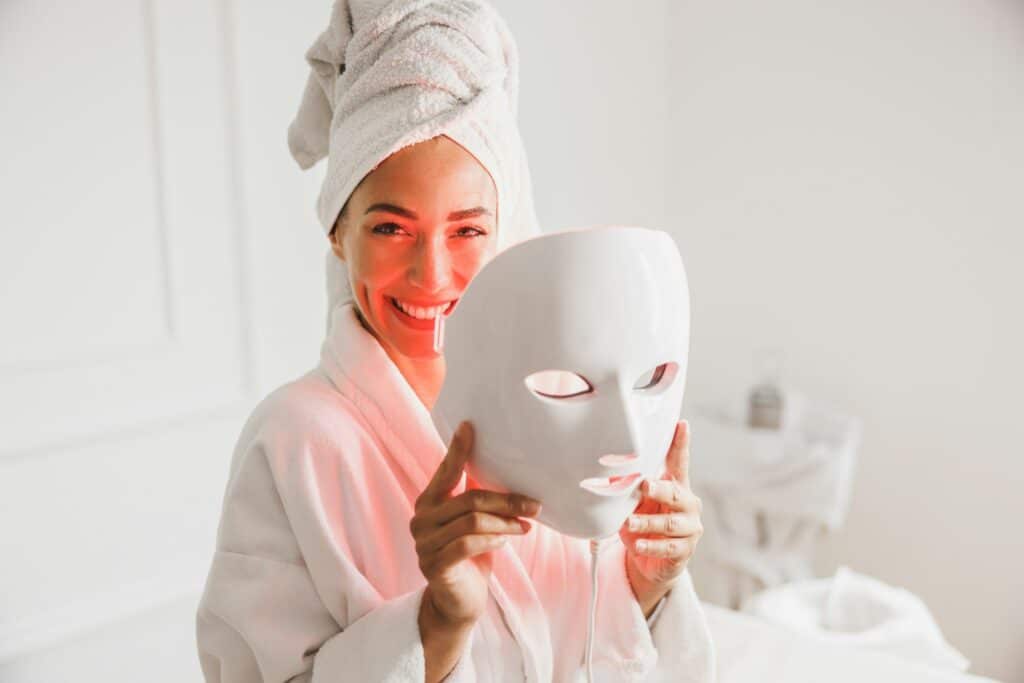
In recent years, LED (Light Emitting Diode) masks have flooded the beauty and wellness market. Promised as the new «miracle» solution for rejuvenating the skin, fighting acne, and reducing wrinkles, they are now generating enthusiasm among some and skepticism among others. So, are they a real technological breakthrough or just a fashion accessory? To find out more, let's dive into the world of phototherapy and the science behind these masks.
What is an LED mask?
An LED mask usually takes the form of an accessory that is placed on the face, incorporating several small LED bulbs that emit light of different wavelengths (red, blue, green, and even infrared). Depending on the manufacturer, the combination and intensity of these lights vary, with the promise of providing various benefits to the skin.
Where does the technology come from?
LED therapy did not appear overnight in the cosmetics industry. Originally, in the 1990s, NASA studied the use of LED light to promote plant growth in space and accelerate wound healing in astronauts. Intrigued by these discoveries, researchers then looked into the effects of this light on human skin. Studies[1] showed that certain wavelengths could stimulate collagen production and reduce inflammation.
What are the potential benefits of LED masks?
- Anti-aging action
- Red wavelengths (approximately 630 to 660 nm) and near-infrared (around 830 nm) are often associated with collagen and elastin stimulation. According to an article published in the Journal of Cosmetic and Laser Therapy[2], these wavelengths could help improve skin texture and reduce wrinkles.
- Acne reduction
- Blue light (approximately 415 nm) is known for its antibacterial properties. It acts in particular on bacteria. Propionibacterium acnes (now Cutibacterium acnes), which causes acne. One study[3] indicates that after several weeks of using blue light, a noticeable reduction in mild to moderate acne can be observed.
- Soothing and reducing redness
- Certain light frequencies, such as green light (around 525 nm), are believed to be linked to improved microcirculation and reduced redness. Although less studied than red or blue light, its calming effect is attracting the interest of dermatologists.
- Improved complexion and radiance
- Manufacturers often highlight the brightening or unifying effect of LED light, which is said to make the skin more luminous and reduce the appearance of pigmentation spots. However, scientific evidence on this subject remains limited.
Number 1: Nooance Pro ✨

Test Result A+
Rating 9.8/10 ⭐⭐⭐⭐⭐
Code Beautydecoded15 = 15% discount
Product tested Le Professionnel" anti-aging LED mask by NOOANCE
Material : Medical silicone
Number of LEDs : 198
- 99 red LEDs - Wavelength: 633 nanometres
- 99 near-infrared LEDs - Wavelength: 830 nanometres
Total power : 90 mW/cm² (in watts/cm²)
For whom Suitable for all skin types
Recommended use Morning and/or evening
Duration of use 10 minutes per session
Frequency of use For acne: 30 minutes a week (i.e. 10 minutes, 3 times a week or 30 minutes in a single session). For acne: 2 sessions of 20 minutes per week.
What I liked «my opinion»:
What I didn't like:
In conclusion, NOOANCE's «Le Professionnel» LED mask is an excellent choice for LED treatment at home.

Proven or exaggerated effectiveness?
While some clinical studies support the effectiveness of LED phototherapy in a professional setting (at a dermatologist's office), the reliability of certain consumer masks is still up for debate. Indeed, LED power, exposure time, and exact wavelength are all parameters that must be perfectly controlled in order to offer real benefits.
- In vitro studies vs. reality
Much research is conducted in laboratories or on small samples of people, sometimes under conditions that are difficult to replicate at home. In addition, the professional masks used by dermatologists are often more powerful and better calibrated than those sold commercially. - Consistency and patience
Even with a reliable device, LED phototherapy requires regular use (2 to 4 times a week, for several weeks) to see visible results. A lack of regularity can therefore negatively affect the expected effects, leading some to dismiss it as a gimmick. - Side effects
LED masks are generally considered safe. However, redness or a feeling of warmth may occur in people with sensitive skin. Wearing eye protection (or closing your eyes) is often recommended to avoid discomfort from the high light intensity.

How to choose an LED mask?
- Check the proposed wavelengths
Ensure that the mask offers wavelengths that are scientifically recognized for their benefits (around 415 nm for blue, 630-660 nm for red, and 830 nm for infrared). - Prioritize quality
Not all masks on the market are created equal. Choose recognized marques masks that have undergone clinical testing or been approved by healthcare professionals. - Consider practicality
Most LED treatments require 10 to 20 minutes per session. Make sure that the mask's design and power source (wires, battery, etc.) are suited to your lifestyle so that you can use it regularly and without constraint. - Follow the instructions for use.
Each mask comes with specific recommendations. Follow the instructions regarding distance, duration, and frequency of use to avoid any risk of skin irritation or overheating.
Conclusion: revolution or gimmick?
LED phototherapy, when used in a targeted manner by professionals, offers real benefits, particularly for acne and certain signs of aging. Studies show promising potential, particularly for red light and blue light, which have been the subject of more in-depth research.
However, the effectiveness of LED masks for home use can vary greatly from one model to another. Some serious devices, backed by clinical studies, can be a useful addition to your skincare routine, while others are more like simple gadgets, lacking in power or wavelength control.
Ultimately, LED masks are neither a magic wand nor a complete scam. They can be a interesting tool to improve skin condition, provided that to focus on quality, to follow a strict protocol for use, and to have realistic expectations. Before investing, it is always advisable to consult a dermatologist or skin care professional to ensure that this type of treatment is appropriate for your situation.
References (examples of publications and online resources)
- NASA Spinoff. (2017). LED Light Therapy
- Lee, S., et al. (Journal of Cosmetic and Laser Therapy, 2013). Study on the effect of red and infrared LEDs on skin elasticity.
- Gold, M. H., et al. (Journal of Cosmetic Dermatology, 2009). Effects of blue light in the treatment of mild to moderate acne.


