
No, your mineral sunscreen isn't healthier (it depends on where you live)

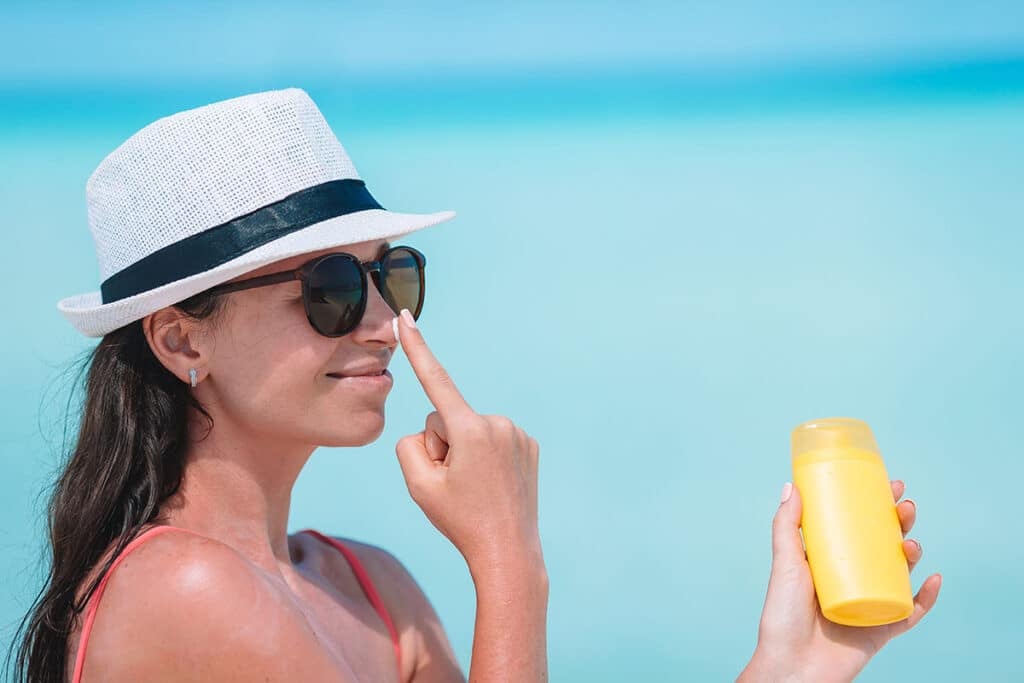
There’s a phrase we’ve been hearing everywhere for the past five years: «Mineral filters are healthier.» It’s reassuring. It’s simple. And in Europe, it’s long since been outdated.
📌 See also: Choosing Sunscreen
What Europe Actually Allows
About 30 UV filters are approved for sale on the European market. Of this total, Only two of them are minerals : titanium dioxide and zinc oxide. Everything else consists of organic filters—the ones that are often mistakenly referred to as «chemical» filters.
Mineral filters: what they do well: They provide adequate protection across the entire UV spectrum, are very well tolerated, and take effect immediately upon application. No waiting period.
What they're not as good at: The white cast. That’s why 100% mineral sunscreens often cap out at SPF 30. Going higher with minerals alone requires high concentrations, which results in a thick texture that’s hard to spread and leaves a white cast.
A Common Misconception to Debunk
«Mineral» does not mean "free of endocrine disruptors.".
Some marques companies have indeed reformulated their new products. But they continue to sell off their old product lines, which still contain the molecules in question. Marketing talks about the future, while the store shelves sell the past.
Organic Filters: The Real European Advantage
These are synthetic carbon-based molecules. They work in a similar way to melanin: they absorb UV energy before it damages the cells, and then dissipate it as heat.
Their benefits: smooth, lightweight, and invisible textures. No white residue.
Their limitations:
- They don't take effect immediately. Allow 20 to 30 minutes for them to set. That's why the rule is: apply before to go out.
- Some molecules can cause irritation or sensitization. But be careful—these are mainly the old filters The substances in question are: oxybenzone, octocrylene, octinoxate, and avobenzone.
However, in recent years, Europe has approved several new-generation organic filters that are much better tolerated. More and more European marques are using only these, without the older ones.
In the United States, these new filters remain banned. American consumers have no choice but to choose between older chemical ingredients and mineral ingredients. This explains the abundance of mineral sunscreens across the Atlantic: it’s not a matter of preference, but a regulatory requirement.
In the Beauty Decoded app, when you scan your sunscreen, you can immediately see which filters it contains, whether they are irritating, whether they are suspected of being endocrine disruptors (by checking the option), and whether they protect against UVA, UVB, or both.
SPF 50, SPF 30: That’s not the real issue
The basic recommendation is still SPF 50 or 50+.
But if you’ve found an SPF 30 that you love and apply generously, stick with it. Because the amount matters more than the number: an SPF 50+ applied in insufficient quantities quickly drops to an effective protection level of SPF 30—or even 20. The best sunscreen is the one you apply in sufficient amounts, every day.
What the INCI Listings Say
SVR Sun Secure Blur SPF 50+ (4.1/5 · 70 reviews — the most-reviewed sunscreen in the database)
Filters: Diethylamino Hydroxybenzoyl Hexyl Benzoate (Uvinul A Plus), Ethylhexyl Triazone, Diethylhexyl Butamido Triazone (Iscotrizinol), Bis-Ethylhexyloxyphenol Methoxyphenyl Triazine (Tinosorb S).
100 % next-generation filters. No octocrylene, no avobenzone, no oxybenzone. This is a perfect example of what Europe allows and the United States does not. Bonus: niacinamide.
Variant Fragrance-Free : 4.3/5 · 30 reviews, same formula. This is the one to recommend.
Garancia Incredible Softness Invisible Sun Protect Fluid SPF 50+ (4.0/5 · 37 reviews)
Filters: Uvinul A Plus, Iscotrizinol, Ethylhexyl Triazone, Disodium Phenyl Dibenzimidazole Tetrasulfonate (Neo Heliopan AP, water-soluble UVA filter).
Same philosophy as SVR, with a fully modern system and a two-pronged approach to UVA protection (fat-soluble + water-soluble). Rice starch for the finish.
La Roche-Posay Anthelios UVMune 400 Dry-Touch Gel-Cream (4.1/5 · 31 reviews)
Filters: Ethylhexyl Salicylate, Ethylhexyl Triazone, Tinosorb S, Drometrizole Trisiloxane (Mexoryl XL), Butyl Methoxydibenzoylmethane (avobenzone) and Mexoryl 400 (Methoxypropylamino Cyclohexenylidene Ethoxyethylcyanoacetate).
Here's the key distinction: UVMune 400 is the only one that covers the Ultra-long-wavelength UVA (up to 400 nm) thanks to Mexoryl 400, an exclusive L’Oréal sunscreen ingredient. However, the formula still contains avobenzone and a significant amount of denatured alcohol.
Community Feedback
Three drugstore sunscreen brands account for the vast majority of feedback on the app, and their INCI lists reveal three distinct manufacturing approaches.
Visit Blur Sun Secure SPF 50+ by SVR is the most reviewed product in the entire category: 70 reviews, 4.1/5. Its list of filters is a textbook example of European ingredients: Uvinul A Plus, Ethylhexyl Triazone, Iscotrizinol, Tinosorb S. All recent ingredients. No octocrylene, no avobenzone. Impossible to formulate in the United States. The version fragrance-free It even scores 4.3 out of 5 based on 30 reviews, which speaks volumes about the true cause of skin irritation—something we’re too quick to blame on filters.
Visit Garancia's "Incredible Invisible Softness" Fluid (4.0/5 · 37 reviews) takes the same approach, with one difference: it adds the Neo Heliopan AP, a water-soluble UVA filter, alongside the fat-soluble filters. Two ways to cover the same spectrum.
L'Anthelios UVMune 400 Dry-Touch Gel-Cream by La Roche-Posay (4.1/5 · 31 reviews) stands out from the rest. It’s the only one of the three to contain Mexoryl 400, an exclusive filter that blocks ultra-long UVA rays up to 400 nm—a real technical advantage. The downside: the formula still contains avobenzone and a significant amount of denatured alcohol. The ratings reflect this, depending on the texture: the invisible fluid scores 3.7/5 (18 reviews), while the anti-dark spot fluid is very poorly rated based on the few reviews available.
This trio illustrates the point perfectly: in the European market, the real question is no longer «mineral or chemical.» It’s «old generation or new generation»—and only the INCI list can tell you that.
What the Community Thinks About Korean Creams
Data from the app confirms this shift: the highest-rated sunscreens are overwhelmingly formulas with organic filters, judged based on a very concrete criterion—comfort.
Visit Relief Sun Aqua-fresh Rice + B5 SPF 50+ Beauty of Joseon has a rating of 5/5 based on 14 reviews. Its older sibling, the Relief Sun Rice + Probiotics SPF 50+, remains the community's top choice with 72 reviews and a rating of 4.5/5. Still on the Korean front, the Hyalu-Cica Water-Fit Sun Serum by Skin1004 (4.9/5, 22 reviews) and the Black Rice Moisture Airyfit by Haruharu Wonder (4.7/5, 23 reviews) top the rankings.
Understand Your Sunscreen in 3 Seconds
Not sure if your sunscreen contains outdated filters, if it actually protects against UVA rays, or if it contains ingredients suspected of being endocrine disruptors? Scan it at Beauty Decoded. The app is free, available on iOS and Android, and provides details on each filter in your plan, along with reviews from thousands of users who have already tried it. Your skincare routine deserves more than just a marketing pitch.
Make the right choices for your skin
Say goodbye to unnecessary get visible results!
Our artificial intelligence recommends personalized cosmetics.





Hello, I’m using jojoba and prickly pear plant oils along with Vichy’s hyaluronic acid and Paula’s Choice vitamin C. My question is: Is Oleassence a good brand? Otherwise, what would you recommend for oily, acne-prone, and mature skin? Especially to reduce nasolabial folds. I just bought all these products and started trying them out three days ago.