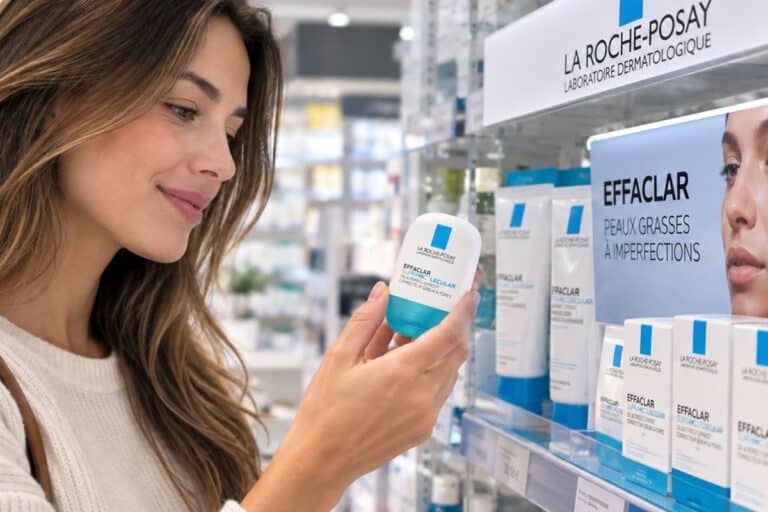
Want to avoid injections? Here's the anti-aging alternative that's all the rage.

Want to avoid injections? Here's the anti-aging alternative that's all the rage.
📌 See also: How long does a facelift really last? No one can answer that question
You look at your reflection, see the first wrinkles starting to appear, and a question keeps coming to mind: «Should I get injections?»
Many patients ask me this question during consultations. My answer often surprises them: The most effective option is neither a trendy device nor a €200 cream. It’s a molecule that dermatologists have been using for over forty years: the retinoid.
Why Everyone Is (Finally) Talking About It
Long available only by prescription, retinoids have made a comeback on social media and in mainstream skincare routines. This time, the buzz is backed by solid evidence.
Retinoids are derivatives of vitamin A. When applied to the skin, they work in several ways:
- they accelerate the renewal of skin cells; ;
- They stimulate collagen production in the dermis; ;
- They reduce fine lines, dark spots, and uneven skin texture; ;
- They improve radiance, often within the first few weeks.
For one simple reason: they are the best-documented anti-aging ingredients in dermatology. This is a far cry from many cosmetic claims that are based on three in-house studies and attractive packaging.
Retinol, retinal, tretinoin: Don't Confuse Them Anymore
This is where most people get confused. There are several forms, some more powerful than others:
- Visit retinol is the most common form used in cosmetics. It is effective but must be converted by the skin, which makes it milder and slower-acting.
- Retinal (retinaldehyde) is a step closer to the active form. It generally works faster than retinol, with a tolerance that is often comparable.
- Tretinoin (retinoic acid) is the active form. It is available only by prescription and remains the gold standard for treating photoaging.
The closer the form is to retinoic acid, the faster the effect, but the greater the risk of irritation. The right form therefore depends on your skin and your tolerance, not on the latest trend.
How to use it without damaging your skin
The classic mistake: starting out strong, ending up with red, peeling skin after a week, and then giving up. Here’s a sensible approach.
- Start slowly : Use twice a week in the evening, on dry skin, applying a small amount (about the size of a pea for the entire face).
- Increase gradually : Start by using it every other night, then more often if your skin can handle it.
- Moisturize : Combine a soothing treatment with a barrier cream.
- Apply it only in the evening : Retinoids make the skin more sensitive to the sun.
- Please be patient : It takes 8 to 12 weeks to see real results, and several months to see the effect on wrinkles.
The topic no one wants to hear about: sun protection
Using a retinoid without sunscreen is like filling a bathtub with the drain open. UV rays are responsible for most of the skin’s visible aging. Using SPF 50 every day isn’t just a bonus—it’s the foundation of any anti-aging strategy, with or without injections.
What about devices, LEDs, and radio frequency?
They do exist—some of them LED masks provide interesting data and can complement a workout routine. But let’s be honest: the results are often more modest than the before-and-after videos suggest, and they depend heavily on the device’s actual technology, frequency of use, and consistency. They are no substitute for a core active ingredient like a retinoid.
What Retinoids Won't Do
We need to be clear about this, because that’s what distinguishes honest information from a marketing pitch.
- They do not fill a loss of volume (cheekbones, temples, deep-set dark circles).
- They don't let up deep expression lines, such as those on the forehead or between the eyebrows.
- They do not replace a facelift or medical treatment when there is a significant amount of excess skin.
Injections address problems that topical treatments cannot solve. The two approaches are not mutually exclusive: they work through different mechanisms. If you want to avoid or delay injections, retinoids and sun protection are the most viable alternative. If your concern is volume loss or a deep wrinkle, no cream will do the job.
Precautions You Should Know
- Pregnancy and breastfeeding : Retinoids are contraindicated. Talk to your doctor before you start.
- Sensitive skin, rosacea, eczema : Ask for advice before you start.
- Persistent irritation : Space out the applications, and see a doctor if the redness doesn't go away.
- Don't try to do everything at once : Avoid combining a retinoid with strong exfoliants (AHAs/BHAs) right from the start.
Key Takeaways
- Retinoids are the non-injectable anti-aging alternative the one with the strongest scientific evidence.
- Start slowly, be consistent, and wait before passing judgment.
- Protect yourself from the sun every day; otherwise, everything else is pointless.
- They don't have the same effects as injections: they improve skin quality, not volume.
Scan your serum
To find out if your serum is right for your skin type Download the Beauty Decoded app (iOS and Android) Scan your products, decipher their INCI listings, and compare what the packaging promises with what the formula actually contains.
The rating depends on your skin type