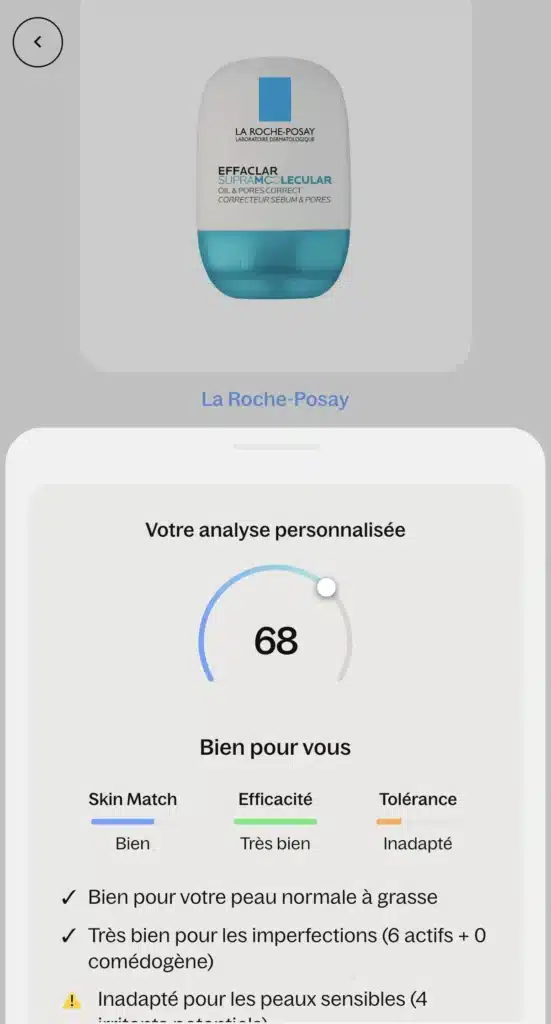
La Roche-Posay's Effaclar Supra Molecular: How Effective Is Its Formula, Really?

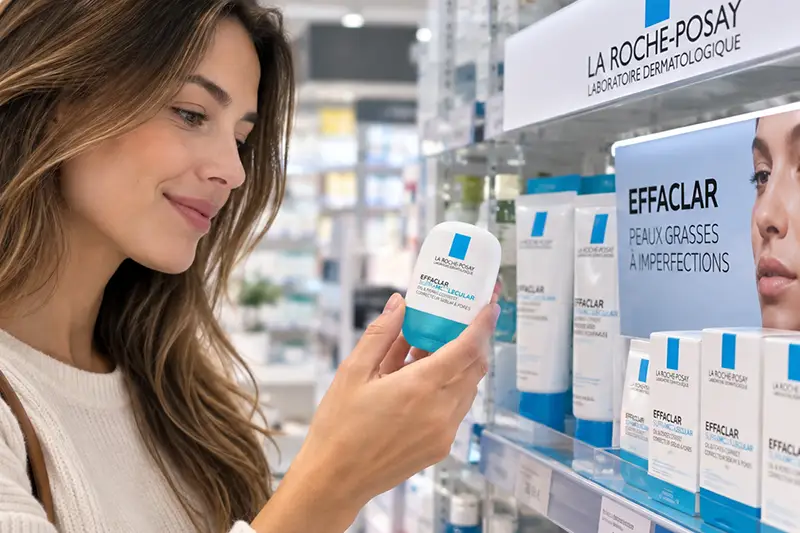
Effaclar is undoubtedly the best-known line of La Roche-Posay For oily and blemish-prone skin. I took a closer look at what the INCI list actually reveals behind the scientific claims.
📌 See also: This vitamin C cream is all the rage on TikTok: its real strength isn't what you might think
Supramolecular chemistry, in a nutshell
Whereas classical chemistry focuses on bonds within a molecule, supramolecular chemistry studies how multiple molecules organize themselves through weak, reversible interactions. The result: assemblies with properties different from those of the individual molecules. La Roche-Posay applies this principle to the combination of niacinamide and salicylic acid—two well-known active ingredients, but combined in a new way.
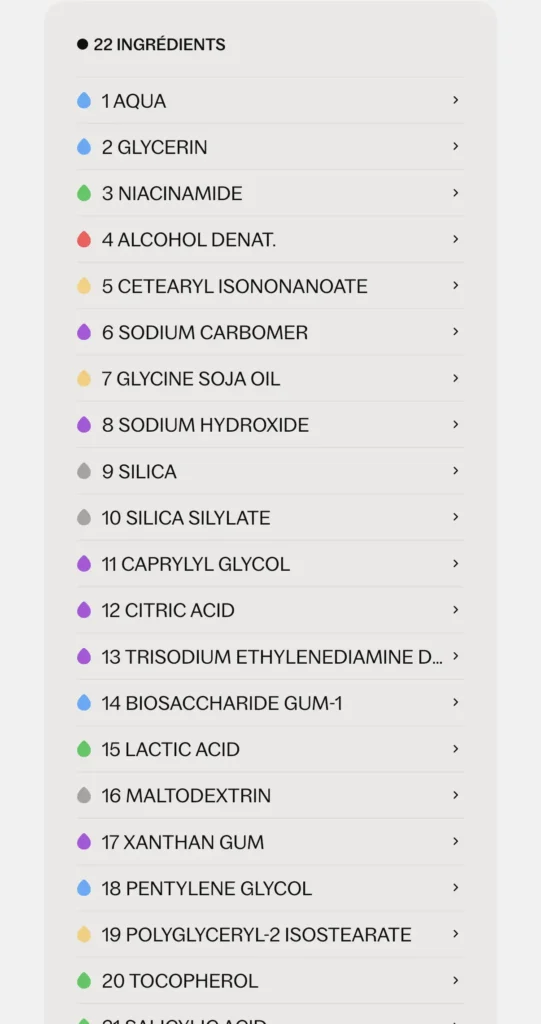
Niacinamide, in the 3rd position
Right after water and glycerin, niacinamide comes in third place. This is a very good sign: it is clearly one of the cornerstones of the formula. It helps maintain the skin barrier’s health and also contributes to an even skin tone and sebum regulation—ideal for oily, blemish-prone skin.
Salicylic acid, much lower
Salicylic acid, on the other hand, appears only in the 21st position, right before the fragrance. The concentration is likely around 1%.
A formula designed to control shine
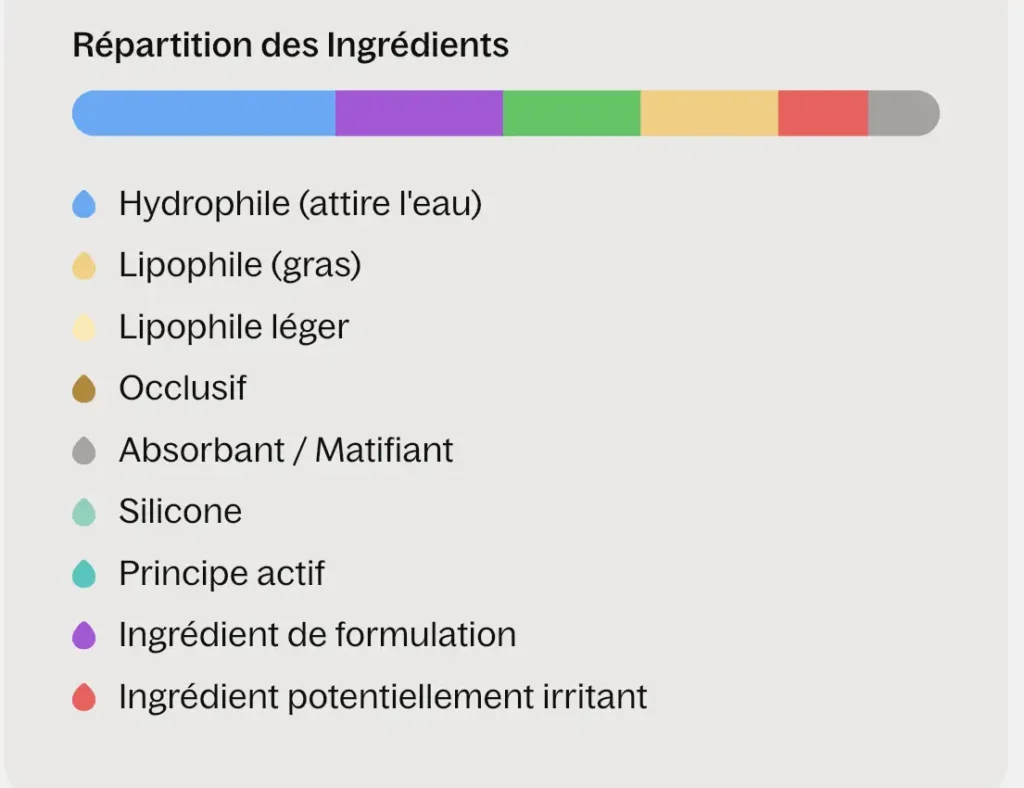
What catches my attention just as much as the active ingredients is the formulation. Silica and silylated silica appear fairly high on the list: these are absorbent powders that help reduce shine and provide a more matte finish.
Fats, After All
An apparent paradox: cetearyl isononanoate in the 5th position and soybean oil in the 7th. Oily skin also needs comfort; the goal isn’t to eliminate all lipids, but to balance hydration (glycerin), emollience (these two ingredients), and a mattifying effect (silica). On paper, the balance is quite clever for a oily skin.
The least appealing aspect: alcohol in 4th place
Denatured alcohol appears right after niacinamide, in the 4th position—so it’s high on the list. It helps create a light texture and a less greasy finish, which may be suitable for oily, resilient skin. However, on sensitive or irritated skin—or skin that has already been treated with retinoids or benzoyl peroxide—such a high concentration of denatured alcohol may be less well tolerated.
On top of that, the fragrance can also irritate even the most sensitive skin.
For which skin type?
Oily skin : This is the most well-balanced formula—light texture, absorbent powders, niacinamide, and salicylic acid—with the expected matte finish.
Normal to oily skin : Also useful, especially for visible pores or shine.
Normal to dry skin : I'm a bit more cautious—the absorbent properties of silica, combined with alcohol, may dehydrate skin that tends to be dry.
Dry skin : This is not the product to choose.
And how does it compare to Effaclar Duo+M?
That's probably the most interesting question. So I'm going to We'll compare the new Effaclar Supramolecular and Effaclar Duo+M in detail in an upcoming article, because La Roche-Posay didn't just change two or three ingredients.
Is this really an improvement, or is the Effaclar Duo+M still the better choice? That’s exactly what we’ll be looking at in my next article.
Scan your moisturizer
To find out if your moisturizer is right for your skin type Download the Beauty Decoded app (iOS and Android) Scan your products, decipher their INCI listings, and compare what the packaging promises with what the formula actually contains.
The rating depends on your skin!