Beauty Tip: How to Reduce Redness on Your Face?

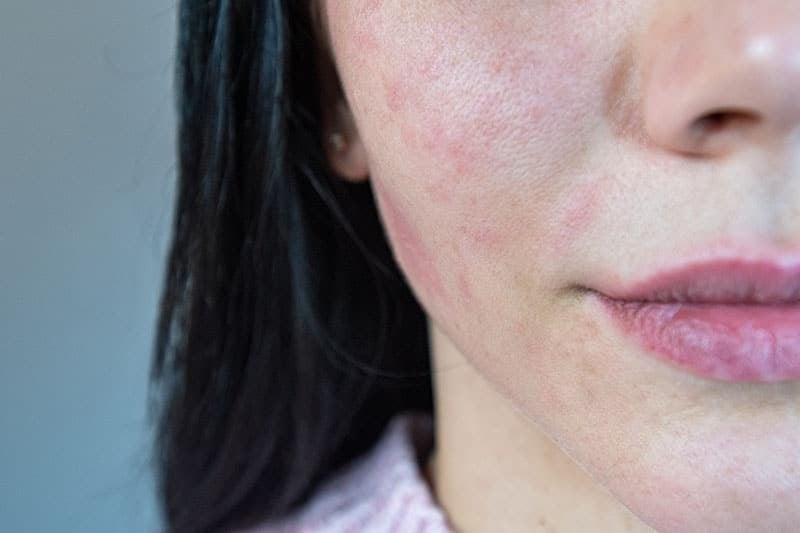
The main causes of redness:
Before you start developing a new battle plan against the facial redness, it is crucial to understand what causes it. Redness that occurs after intense physical activity or exertion should not be a cause for concern.
📌 See also: Acne and the Sun: Why Your Flawless Skin in August Will Let You Down in September
The causes of facial redness vary widely and include:
Natural reactions caused by physical exertion, changes in body temperature, or environmental conditions.
An intrinsic sensitivity of the skin; certain skin types are more prone to sensitivity and fragility and are likely to react negatively to external stressors.
Specific skin conditions such as rosacea, l'acnethe rosacea, or hives.
To reduce this redness, it is essential to follow a personalized skincare routine and avoid certain products that can make the problem worse.
For hypersensitive skin, the priority is to avoid Factors that worsen redness. This includes avoiding harsh products such as coarse-grained exfoliants and drying soaps, opting for gentle lotions, cleansing and drying the skin gently to avoid irritation, and using sunscreen for protection when outdoors.
Ingredients That Help Reduce Redness
L'tranexamic acid, for its part, is known for its ability to treat hyperpigmentation and persistent redness. Originally used in the medical field to reduce bleeding, this acid was found to have beneficial effects on the skin. It works by inhibiting interactions between inflammatory cells and melanocytes, which can reduce the appearance of redness and pigmentation spots. Tranexamic acid is particularly effective for people suffering from melasma or post-inflammatory redness, offering a noticeable improvement in skin tone evenness.
Azelaic acid is another valuable ingredient for treating redness and hyperpigmentation. Naturally found in wheat, rye, and barley grains, this dicarboxylic acid has antibacterial, anti-inflammatory, and antioxidant properties. It works by regulating keratin production, thereby reducing blemishes and preventing clogged pores. Azelaic acid is particularly effective against rosacea, a condition characterized by chronic redness and breakouts on the face. By inhibiting bacterial growth and soothing inflammation, it helps visibly reduce redness and even out the complexion.
Soothing Ingredients
Visit Centella Asiatica, also known as tiger grass, is a medicinal plant renowned for its healing and soothing properties. Rich in saponins—which are anti-inflammatory compounds—Centella Asiatica effectively reduces redness and promotes the repair of the skin barrier. It also stimulates collagen production, thereby improving the skin’s elasticity and firmness. Its gentle action makes it ideal for sensitive and reactive skin.
Visit beta-glucans help reduce facial redness by strengthening the skin's protective barrier. This emollient is ideal for reddened skin because it moisturizes and repairs dry, irritated skin, thereby reducing redness.
Aloe vera, known for its soothing properties, is perfect for reddened and irritated skin. Rich in anti-inflammatory properties and antioxidants, it soothes and reduces redness, and is also effective against sunburn. This plant also constricts dilated blood vessels, thereby reducing redness.
Thanks to its soothing properties and high antioxidant content, panthenol relieves skin irritation and provides protection against environmental stressors.
Hydration and Precautions
Well-hydrated skin is less likely to react strongly to external irritants. Choose creams that are suitable for your skin type, especially if you have atopic or particularly sensitive skin.
Choose Products Carefully
Several products are very popular, especially on social media platforms. However, an ingredient that’s beneficial for some skin types may be irritating to others. If you have sensitive skin, it’s best to avoid strong retinoids or retinol; bakuchiol may be a gentler alternative. Similarly, harsh mechanical exfoliants and scrubs should be avoided. Acne treatments, such as benzoyl peroxide, salicylic acid, and glycolic acid, can dry out the skin and should be used sparingly on sensitive skin.
Dealing with facial redness requires a thoughtful and personalized approach. By understanding the causes, adopting a tailored skincare routine, and prioritizing soothing natural ingredients, it is possible to restore balanced, healthy skin.
Make the right choices for your skin
Say goodbye to unnecessary get visible results!
Our artificial intelligence recommends personalized cosmetics.