
I Stopped Making These 3 Skincare Mistakes That 90% of People Make: Here's What Changed

A blemish-fighting cream that actually causes breakouts, a «high-tech» serum that contains almost no active ingredients, a cream «for all skin types» that really isn’t suitable for anyone. Ever since I started systematically scanning my products, there are three pitfalls I no longer fall into. Here they are, along with what I now look for in an ingredients list before buying.
📌 See also: CeraVe or La Roche-Posay: Which retinol serum should you choose based on your skin type?
Mistake #1: Accumulating irritants without realizing it
I'm going to stop buying products that contain too many irritating ingredients. After analyzing my skincare routines, I realized that breakouts were most often caused by a accumulation of irritants, not any one «culprit» product in particular.
On their own, a cleanser, serum, or cream may be well tolerated. But when you layer multiple products every day that contain fragrance, denatured alcohol, essential oils, or harsh surfactants, the skin barrier eventually becomes compromised. Irritated skin becomes more reactive, more prone to inflammation, and therefore more prone to breakouts.
Check out this anti-blemish cream: 21 potentially irritating ingredients. On my skin, that would be a disaster. That's the whole paradox: a product meant to soothe breakouts can, on sensitive skin, actually make them worse.
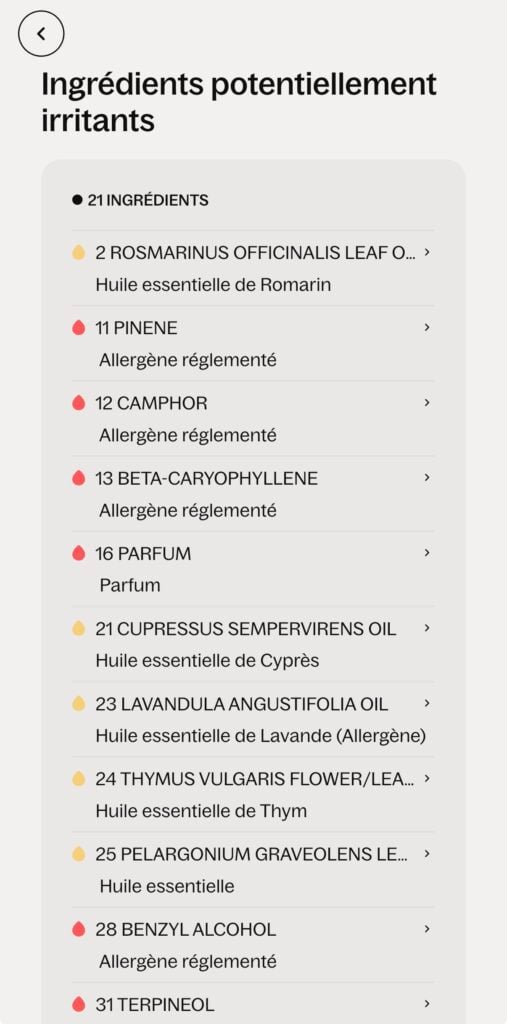
An important distinction: «potentially irritating» does not mean «irritating to everyone.» It all depends on the concentration, the ingredient’s position in the INCI list, and your own sensitivity. That’s precisely why an ingredient listed at the top of the list carries more weight in the analysis than one present only in trace amounts.
Scan your cream
To find out if your moisturizer is right for your skin type
Scan your products, decipher their INCI listings, and compare what the packaging promises with what the formula actually contains.
Download the Beauty Decoded app Available on iOS and AndroidMistake #2: Paying for a «specialized» serum that contains only plant extracts
I’m also done falling for these so-called “high-tech” serums. Dropper bottles, lab jargon, spectacular claims—it all sounds like a cutting-edge formula. But once you decode the INCI list, you often find water, glycerin, a few plant extracts… and no ingredient with proven effectiveness.
Take a look at this serum: it contains a few plant extracts, but nothing that justifies the outrageous claims on the packaging.
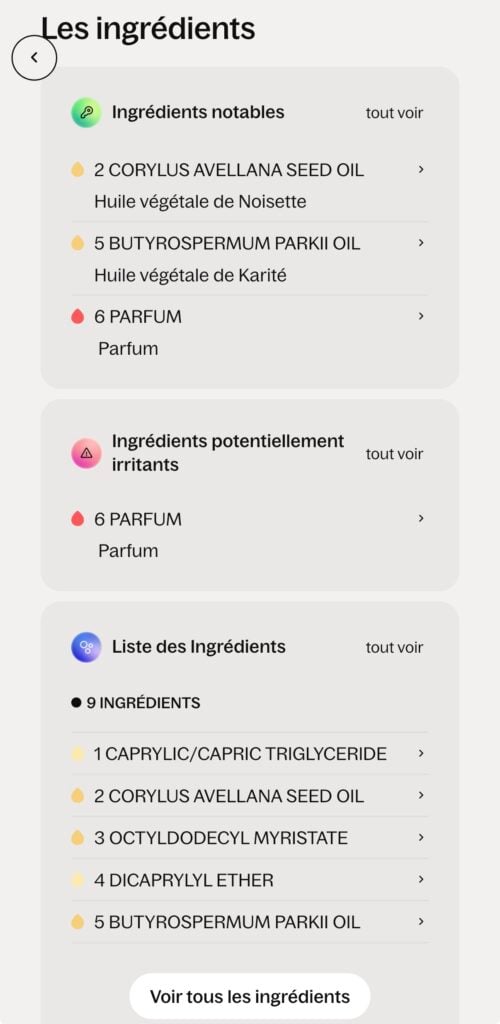
Plant extracts are not inherently useless. However, clinical data on them is generally limited, and their concentration is rarely known. In contrast, active ingredients such as niacinamide, retinoids, the’azelaic acid or the vitamin C are backed by much more robust studies. When a serum contains none of these, its price and claims are worth questioning.
Mistake #3: Believing the claim «for all skin types»
This is undoubtedly the most common mistake. When it comes to moisturizers, The ratio of fatty ingredients to aqueous ingredients is crucial, and it's completely different depending on whether you have dry or oily skin.
- Dry skin : It needs a formula rich in oils, butters, squalane, and ceramides to compensate for the lack of lipids and limit water loss.
- Oily skin : It tolerates a water-based, lightweight formula better—one that relies on humectants such as glycerin or hyaluronic acid and contains few occlusive oils.
Therefore, a single cream cannot be ideal for both of these skin types at the same time. If it’s too rich, it may cause shine and breakouts on oily skin. If it’s too light, it will leave dry skin feeling uncomfortable after a few hours. «For all skin types» mainly means that the product was designed not to cause discomfort for anyone, not to be a perfect fit for everyone.
What I Look for Now When I'm Checking Out a Cream
When I scan a cream with BeautyDecoded, I immediately see three things:
- The ratio of fatty ingredients to aqueous ingredients, to see if the texture really suits my skin type.
- Ingredients That Are Good for My Skin, and the ones that are missing in relation to what I'm trying to correct.
- Irritating potential, ingredient by ingredient, taking into account their position on the list.
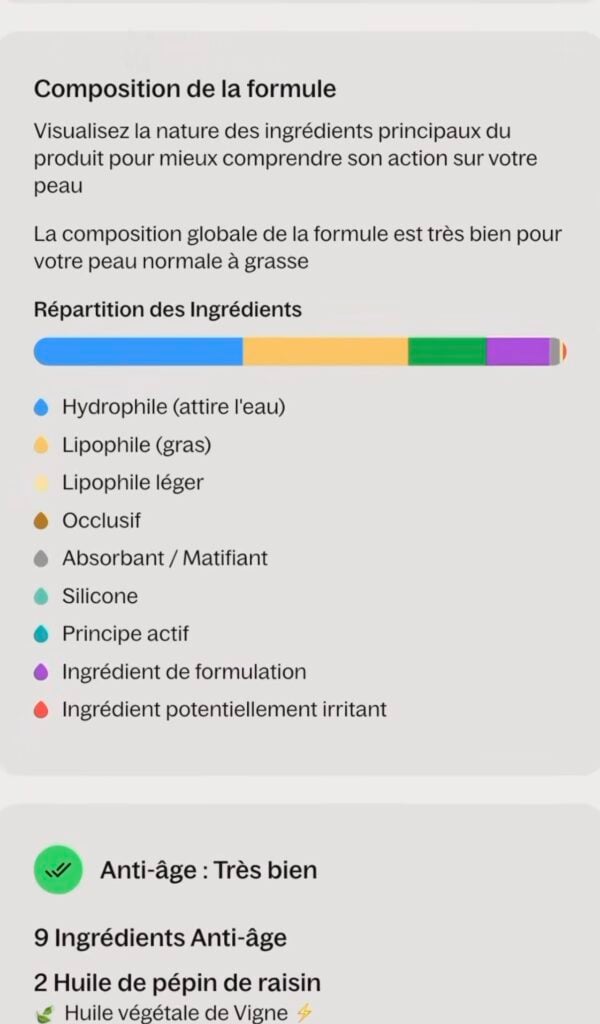
The app analyzes the INCI list using a database of 30,000 ingredients and adjusts the score for 80 skin profiles. The same product can therefore receive a good score for dry skin and a poor score for oily skin: this is exactly the kind of information that the claim «for all skin types» will never provide.
In a nutshell
Fewer cumulative irritants, proven active ingredients, and a formula tailored to your skin type: these three tips are all you need to avoid most disappointing purchases. Before your next purchase, scan the product in BeautyDecoded and see what the ingredient list really says—beyond what the packaging claims.


